
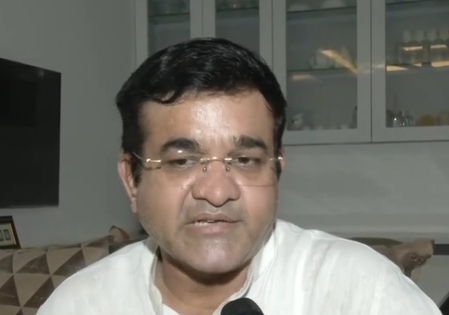
Bhopal, July 7 (IANS) Animesh Bhargave, one of the two Hindu members in the recently reconstituted Waqf Board committee of Madhya Pradesh, outlined his priorities while defending his appointment as an ‘inclusive’ move and one aimed at bringing more transparency in the board’s functioning.
Speaking to IANS, Bhargave said that the ten-member Board’s foremost priority was to increase the efficiency of Waqf board properties, prevent income leakages, and transfer benefits to the disadvantaged and marginalised classes within the minority community.
“The government’s intention behind appointing us is to bring transparency. Many people have flagged underutilisation of Waqf properties and encroachment on land. Buildings and assets have been taken over, but proper rent is not being paid, so the board is not generating adequate income. We aim to improve these areas and stop leakages,” he explained.
Responding to critics, he said that these properties have long been held by a noted few, and they fear that greater transparency will expose them and end their fiefdom.
Outlining his role as an ‘expert and advisor’, he said they will devise a strategy to prevent income leakage within the Board and focus on increasing revenue.
“The properties are being misused. The potential income they could generate is not being realised. I will try to contribute as an expert or advisor in this regard,” he elaborated.
Notably, Bhargave, along with Manoj Malpani, is one of the two non-Muslim members of the newly constituted MP Waqf Board under the amended Waqf Law. Their appointment to the Board triggered full-blown political controversy and widespread debate.
As the questions surround his appointment to the Waqf Board, he said that the inclusion of Hindu members in the Waqf Board was in accordance with laws enacted by Parliament, and there is nothing immoral about it.
Notably, Madhya Pradesh is the first state in the country to reconstitute its Waqf Board under the Waqf Amendment Act, 2025. The new law provides for the inclusion of at least two non-Muslim members in State Waqf Boards, a major departure from the earlier Waqf Act, 1995, under which members were drawn exclusively from the Muslim community.
The restructured Board is expected to play a key role in streamlining Waqf-related affairs, preventing encroachments, and ensuring that these properties serve the intended socio-economic purposes, the government said earlier.
–IANS
mr/dan