
Washington, Feb 27 (IANS) After reports of women giving birth alone behind bars, US lawmakers have introduced legislation that would require every federal prison housing women to employ a full-time obstetrician-gynaecologist.
The proposed Ensuring OB-GYN Care in Prisons Act seeks to amend US law to ensure access to obstetrician-gynaecologists for female prisoners.
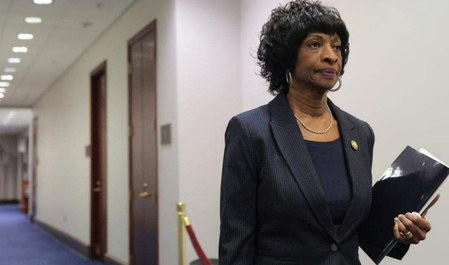
The bill, introduced by Representatives Valerie Foushee, Yassamin Ansari, and Sydney Kamlager-Dove, comes amid growing concern over the treatment of pregnant inmates and the absence of specialised medical staff in correctional facilities.
Under the bill, the Director of the Bureau of Prisons shall employ at least one, and may employ more than one, obstetrician-gynaecologist certified by the American Board of Obstetrics and Gynecology on a full-time basis at each facility where female prisoners are incarcerated.
It also requires that each female prisoner incarcerated by the Bureau of Prisons have an initial visit with the obstetrician-gynaecologist employed at the facility not later than 14 days after imprisonment.
The legislation lays out core medical services to be provided on-site. These include menstrual health care and pain management, contraceptive counselling and access, prenatal care and pregnancy screenings, postpartum care and recovery, and mental health screening for postpartum depression.
It further establishes patient protections. Female prisoners must receive informed consent for any exam or procedure, the right to refuse non-emergency care, and clear communication in their preferred language.
To prevent delays, the bill directs prison authorities to create a referral process for outside specialists when medically necessary.
It specifies that the Director may not refuse to provide a prisoner with such care based on cost or staffing constraints.
Women make up a minority of the prison population in both countries, yet their medical needs are often distinct and resource-intensive. Civil society groups in India and elsewhere have called for stronger monitoring of maternal health in custody, underscoring that the issue extends beyond national borders.
–IANS
lkj/rs