
New Delhi, July 4 (IANS) Trinamool leader Chandrima Bhattacharya’s allegations on Saturday of being kept in the dark on the West Bengal Budget till barely hours before her presentation in the Assembly as Finance Minister, and Dinesh Trivedi’s 2012 exit from the Railways after a controversial fare hike, are two episodes that reflect a pattern.
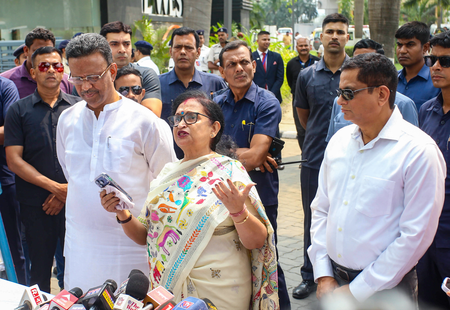
Soon after relinquishing her party posts, Bhattacharya claimed that the state Budget was never discussed with her or revealed to her until just hours before it was made public. This was when the party Chairperson and then Chief Minister, Mamata Banerjee, had appointed her as the state Finance Minister.
When the 2021 Budget was presented, as then Chief Minister, Mamata Banerjee reportedly claimed she had prepared the document while walking on her treadmill. The statement had raised eyebrows over the apparent role of the then Finance Minister. There were also allegations that Mamata had passed a note to Chandrima while she was delivering her Budget speech, asking her to announce a DA hike for state government employees.
Such allegations and Dinesh Trivedi’s 2012 episode mark ministerial marginalisation and the party’s internal governance, especially through its time in power. Some 14 years ago, Trivedi had to unceremoniously give in, apparently to party demands for his resignation, after holding on for a few days.
Sources close to him claimed that Trivedi had sought time with the party supremo to discuss some of the issues, failing which, he had left the details with one of her close confidantes in the then Chief Minister’s Office in Kolkata.
Trivedi, who assumed office as Railway Minister in the Manmohan Singh-led United Progressive Alliance-II government after Mamata vacated it to become West Bengal Chief Minister, was aware of his leader’s populist inclinations, they added. However, he was also convinced that the Railways needed a facelift, especially in terms of safety and security, which called for an across-the-board fare hike, “with nominal changes in lower class prices”, they said.
Replacing him, the new Railway Minister, Mukul Roy, announced that the hike in passenger fares for second-class suburban and non-suburban sleeper, AC chair car, and AC three-tier would “remain unchanged”. However, there was no mention of reduction in the 15 paise and 30 paise per km increase in AC two-tier and AC-1 fares, respectively, earlier proposed by Trivedi.
It was an indication of the government capitulating to pressure from the Mamata Banerjee-led ally, abandoning key reform measures announced in the Railway Budget, the Opposition had criticised then. The Congress was part of the first Mamata-led coalition government in West Bengal, formed after the Left Front’s defeat in 2011.
Thus, while Trivedi was replaced, and his Railway Budget partly redrafted, Bhattacharya was allegedly excluded from even participating in the state Budget, while the party centralised all control. In both cases, it led to the public resignation of the concerned person from their respective posts, raising questions about party governance.
In the earlier instance, Trivedi’s humiliation was overshadowed by the historic 2011 West Bengal victory after a record 34 years of communist reign. In the latest case, the issue has come to haunt the party following its loss in this year’s Assembly election and the subsequent displeasure and disintegration within.
But the allegations, if true, mirror a pattern where party chiefs retain control over major policy announcements, sidelining ministers who are nominally responsible. Trivedi’s 2012 Budget sought fare increases and institutional reforms, such as a tariff regulator and the restructuring of the Railway Board, framed as necessary for safety and finances. But the party’s populist response prioritised immediate political acceptability and reversed many measures. Trivedi then had to pay the political price.
Today, he is India’s High Commissioner to Bangladesh and has been elevated to the rank of Cabinet Minister.
–IANS
jb/dan