
Tehran, Feb 9 (IANS) The secretary of Iran’s Supreme National Security Council (SNSC), Ali Larijani, will lead a delegation to the Omani capital of Muscat on Tuesday, according to the SNSC-affiliated Nour News.
Larijani is scheduled to meet with high-ranking Omani officials to discuss regional and international developments, as well as bilateral relations, the news outlet reported Monday.
The visit comes after Oman hosted and mediated a round of indirect nuclear negotiations between Iran and the United States on Friday, Xinhua news agency reported. Amid heightened tensions between the two nations, Oman is considered a potential venue for future talks.
At a news conference in Tehran on Sunday, Iranian Foreign Minister Seyed Abbas Araghchi said the date and location for the next round of nuclear negotiations would be determined through consultations with Oman.
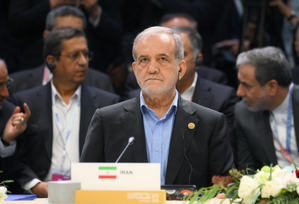
Iranian President Masoud Pezeshkian on Sunday characterized recent indirect nuclear negotiations with the United States as a “step forward,” even as Washington moved to tighten the economic noose around Tehran with new sanctions and tariff threats.
The talks, mediated by Oman, represent the first high-level contact between the two adversaries since the Israel-Iran conflict last June, during which the United States attacked Iran’s key nuclear facilities.
While Pezeshkian framed the dialogue as Tehran’s “consistent strategy” for peaceful resolution, analysts say the diplomatic opening reflects cautious crisis management rather than any genuine rapprochement.
Writing on his X account, Pezeshkian said Iran’s nuclear ambitions remain firmly within the “explicit rights” guaranteed by the Nuclear Nonproliferation Treaty. “The Iranian nation has always responded to respect with respect,” he wrote, “but it does not tolerate the language of force.”
Iran’s Foreign Minister Seyed Abbas Araghchi, who led Iran’s delegation in Muscat, suggested Washington lacks the “necessary seriousness” to carry the diplomatic process forward.
The continued imposition of sanctions on Iran and certain military movements in West Asia, Araghchi said, “raise doubts about the other side’s level of seriousness and readiness,” pointing to what he described as mixed signals from the United States.
He stressed that Iran’s peaceful nuclear rights, including uranium enrichment, are non-negotiable and said any progress would depend on the United States treating that issue with seriousness. Iran’s missile programme, he added, has never been and will not be on the agenda of talks with Washington, with negotiations focused solely on the nuclear issue.
The United States and Israel have said Iran must dismantle its nuclear capacity and curb its ballistic missile programme — demands analysts say Tehran is unlikely to accept.
–IANS
/as