
Tehran/New Delhi, June 23 (IANS) The emerging regional order increasingly favours countries capable of maintaining productive ties across geopolitical fault lines, and few major powers are as well-positioned as India.
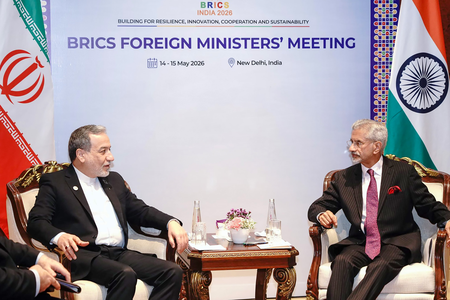
New Delhi enjoys robust relations with the United States, Israel and the Gulf nations while also preserving channels of engagement with Iran. Rather than forcing India to choose sides, a more stable Tehran-Washington relationship could widen the diplomatic space for New Delhi’s multi-aligned strategy, a report has highlighted.
“The most consequential outcome of the 2026 Hormuz War may ultimately be found not on the battlefield but at the negotiating table. Iran has not emerged as an undisputed military victor. Yet it may have secured something more durable: a transformation in its diplomatic status. After four decades of sanctions, isolation and containment, Tehran is once again being treated as an indispensable participant in discussions on regional security, energy stability and the future order of West Asia,” former Indian diplomat Sanjay Kumar Verma wrote in ‘India Narrative’.
“Diplomats learn early in their careers that countries are rarely as isolated as political rhetoric suggests. Governments may be sanctioned, condemned or excluded from particular forums. Yet when geography, resources and security interests converge, yesterday’s outcast often reappears at today’s negotiating table. The events surrounding the Hormuz conflict offer a striking illustration of that reality,” he added.
According to Verma, the most revealing aspect of the ceasefire and the ensuing negotiations lies not in what Iran may ultimately concede, but in what the United States has already been forced to acknowledge: “a country long viewed primarily as a problem to be managed has become a counterpart that must be engaged.”
The seasoned diplomat noted that the recent developments carry direct implications for India, given that a substantial share of India’s energy imports transits through the Gulf, while millions of Indian citizens live and work across West Asia.
“Any prolonged disruption in the region immediately affects energy security, remittances and economic stability. At the same time, a less isolated Iran could create new opportunities. Connectivity initiatives such as Chabahar may become easier to advance in a more stable diplomatic environment. Yet the larger lesson for India is strategic rather than commercial,” Verma stated.
He noted that the takeaway from 2026 is neither that Iran has embraced the West nor that decades of differences have suddenly vanished. Rather, he said, the lesson is more pragmatic and perhaps more significant – “durable regional orders are rarely built by ignoring significant actors, however uncomfortable their presence may be.”
“History may therefore record that Iran won no decisive military victory in 2026. Yet it achieved something potentially more enduring. After four decades on the margins of the international system, it persuaded even its adversaries to acknowledge a reality they had long resisted: no stable order in West Asia can be constructed without Iran having a place in the conversation,” Verma emphasised.
–IANS
scor/ksk/as