

Visakhapatnam, Aug 21 (IANS) The Rashtriya Swayamsevak Sangh (RSS) and its affiliated organisations have voiced concern over demographic imbalance, saying it affects social harmony in some regions.
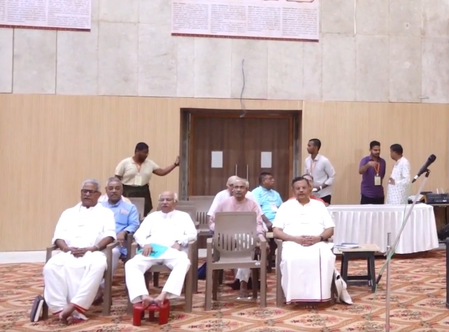
The three-day all-India coordination meeting of the RSS and its affiliated organisations, which concluded on Friday at Gudilova near Visakhapatnam, discussed the issue of demographic changes.
Briefing the media, RSS Joint General Secretary C.R. Mukund said that serious discussions took place regarding demographic changes and imbalances.
Stating that demographics all over the world are challenging, he said many countries were facing the problem of an ageing population.
The meeting examined India’s situation in the context of challenges arising from ageing populations and declining fertility rates observed in many countries across the world.
Mukund said though India has the world’s largest youth population, demographic scientists have predicted a similar situation in India in the next 3-4 decades such a situation in India
“Fertility rate coming down is one issue, but there is also demographic imbalance, which we have discussed. This is affecting social harmony in some regions,” he said.
He said the meeting had taken the imbalance seriously due to a sharp increase in the population of some communities and a decline in population of other communities.
Discussions were held on maintaining balance and harmony in society while addressing the changing demographic proportions across various regions and communities and their social impacts, he said.
“We discussed what we can do as NGOs and other Sangh-inspired organisations. We are thinking and planning,” he said.
Mukund said detailed discussions were held regarding the mindset, aspirations, creative potential, and future-related concerns of the younger generation, as well as their role in nation-building.
He pointed out that the Sangh is actively engaged with a large number of young people. This year, approximately 21,000 young volunteers participated in the Sangh’s 21-day training camps.
The RSS Joint General Secretary said youth constitute over 60 per cent of the volunteers attending daily ‘Shakhas’ across the country.
It was emphasised that instead of engaging in merely didactic dialogue with the youth, it is essential to establish direct connections, understand their sentiments and concerns, and foster a sense of affinity towards the country, culture, and social values through meaningful dialogue.
Replying to a query about the recent protest by youth at Jantar Mantar, the RSS leader said they think that this happened due to some failures in the system. He said the meeting discussed this issue.
Mukund said RSS and organisations want systems to work in a good way, and for this, the government has to take some steps.
“Wherever there are flaws in the system, addressing them requires awareness and effort from society alongside the government. Issues like NEET or other systemic problems give rise to anxiety among the youth regarding their future. It is essential to understand and resolve this concern.
Mere protest or disruption will not provide a solution. Both the government and society must work together with a positive and constructive approach to improve the system,” he said.
The meeting also expressed serious concern about the growing menace of drug abuse. It noted with concern the increasing access to narcotics among the country’s youth and students. Emphasis was placed on the need to resolve this issue not merely at the government or police level, but through the active participation of society as a whole.
Deliberations took place on the need for coordinated efforts—involving educational institutions, parents, social organisations, the administration, the police, and other stakeholders—to create a drug-free society.
–IANS
ms/uk