

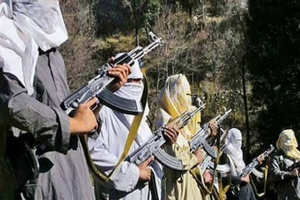
Islamabad, Feb 11 (IANS) The threat posed by the ISIS-K remains a cause of concern and its potential resurgence in Pakistan could destabilise the wider region, including India, as the terror group is currently attempting to reassert itself beyond its traditional sphere of operations.
The risk, a report highlighted on Wednesday, may intensify if Pakistan covertly attempts to re-negotiate with ISKP and steer its activities towards Kashmir by enabling operations targetting India.
According to a report in the India Narrative, India must remain fully vigilant while assessing ISKP’s imprints, as Pakistan’s internal security instability could facilitate cross-border terror operations and contribute to the emergence of new terror networks aimed against India.
“After almost five years, ISIS has carried out a high-intensity terror attack in the subcontinent, targetting Pakistan’s Shia mosque, killing more than 30 people and injuring around 170. The last such attacks were the 2023 Khar bombings, the deadly Peshawar Mosque bombing in Pakistan in 2022, which killed more than 60 people, and the Abby Gate bombings during the US withdrawal from Afghanistan in 2021, which killed over 170 people,” the report detailed.
“After two years, ISIS-K carried out such a high-intensity suicide bombing, that too during the visit of the Uzbekistan President to Pakistan. This may appear an episodic case of terror, but passing it off as such would be unwise, and closer attention to the Khorasanis’ struggle for their foothold in the South Asian subcontinent raises a serious alarm for regional security,” it mentioned
The report stressed that the recent Islamabad mosque bombing carried out by ISIS-K represents another instance of exploiting security vacuums in Pakistan, particularly at a time when the Baloch Liberation Army (BLA) launched the second phase of Operation Herof from January 31 to February 8.
Citing reports, it highlighted that Pakistan’s intelligence agency, ISI, entered into a clandestine understanding with ISIS in 2017, under which the terror group agreed not to attack Pakistan and to restrict its activities in Afghanistan. Despite this, ISKP carried out a suicide bombing at a Baloch Awami Party (BAP) political rally in the Mustang district in Balochistan.
“While ISKP didn’t directly target Pakistani establishments until 2020, it has been argued that through secret engagements with ISKP, Pakistan sought to cultivate ISKP as a proxy against the Taliban and the Balochis. Allowing and tolerating ISKP’s activities in Afghanistan serves Pakistan’s dual strategic benefits: first, proxy warfare against the TTP and the BLA, and second, diplomatic brownie points through extradition and intelligence sharing on ISKP members, such as the March 2025 arrest and extradition of ISKP commander Mohammad Sharifullah to the US,” the report stated.
“However, this clandestine dual-benefit cooperation with ISKP has caused severe blowback for Pakistan’s security establishment and has become a failing gamble,” it noted.
–IANS
scor/as