
Jaipur, April 18 (IANS) Speaker of the Rajasthan Legislative Assembly, Vasudev Devnani, emphasised that legislative drafting is central to the law-making process and must reflect the aspirations of the people in clear and simple language.
He stated that the process of passing bills in the Assembly is conducted with utmost care, transparency, and attention to quality, ensuring effective, people-centric legislation.
Devnani was addressing participants at the 37th International Training Programme on Legislative Drafting, organised by the Parliamentary Research and Training Institute for Democracies under the Lok Sabha Secretariat, as part of the Indian Technical and Economic Cooperation Programme of the Ministry of External Affairs.
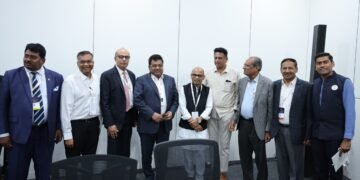
The programme attracted 43 delegates from 17 countries, including Bangladesh, Bhutan, Ghana, Kenya, Sri Lanka, Tanzania, and Zambia. The Speaker also interacted with the delegates and joined them for a group photograph.
Devnani outlined the three key stages of the legislative process: introduction of a bill, detailed deliberation (often with committee scrutiny), and final passage through voting.
He stressed that each stage is designed to ensure that laws are robust, comprehensible, and aligned with public interest. Clear and simple language, he noted, is fundamental to delivering justice.
Describing the Assembly as a “temple of democracy,” Devnani said it plays a vital role in shaping inclusive development and enacting social welfare legislation.
As the Assembly celebrates 75 years of its establishment, he highlighted its journey from the early years of state formation to the present era of digital governance.
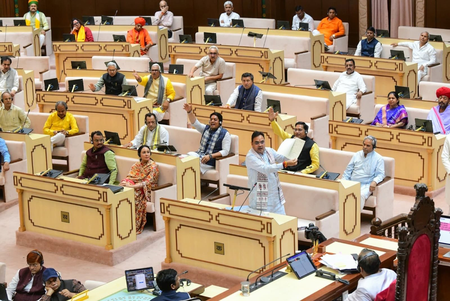
With 200 members, the Assembly reflects the collective will and aspirations of the people of Rajasthan.
The Speaker remarked that as India completes 75 years of independence, it is entering the transformative phase of ‘Amrit Kaal’, a 25-year journey leading up to 2047, marking 100 years of independence.
He described this period as an opportunity for introspection and for setting ambitious national goals.
Referring to the Rajasthan Legislative Assembly as the “Pink House” of Jaipur, Devnani said it has emerged as a model institution through the complete digitisation of its legislative records. This transformation enhances transparency, accountability, and efficiency in governance.
He also highlighted the Assembly building as an architectural landmark blending traditional Rajasthani design with modern functionality.
The Speaker noted that the Assembly’s modern digital museum serves as a bridge between the institution and the public, especially the youth. It offers insights into the state’s democratic journey and helps citizens better understand legislative proceedings.
Encouraging international participants, Devnani said that interactions with experienced legislators provide valuable practical insights beyond academic learning.
He added that such exchanges strengthen democratic systems globally, as law-making serves as a universal language of governance.
He expressed hope that the delegates would experience the true spirit of “Padharo Mhare Desh” during their visit to India.
During the programme, participants from countries such as Tanzania, Kenya, and Malaysia raised questions on subjects including Centre-State relations, women’s reservation, the Anti-Defection Law, and private member bills.
Government Chief Whip Jogeshwar Garg and Opposition Chief Whip Rafiq Khan addressed these queries in detail, leading to a meaningful exchange of ideas.
Among those present were Leader of the Opposition Tikaram Jully; Government Chief Whip Jogeshwar Garg; Opposition Chief Whip Rafiq Khan; MLAs Dr Gopal Sharma, Chandrabhan Singh Aakya, Kailash Verma, Gurveer Singh, and Dr Shikha Meel Barala. Also present were Bharat Bhushan Sharma, Principal Secretary of the Rajasthan Legislative Assembly; Rajkumar, Director of the Parliamentary Research and Training Institute for Democracies Programme; and Programme Director K.M. Chaturvedi.
Ms Phurpa Dema from Bhutan delivered the vote of thanks. The international participants expressed appreciation for the museum within the Assembly complex, describing it as informative, engaging, and insightful.
–IANS
arc/dan