

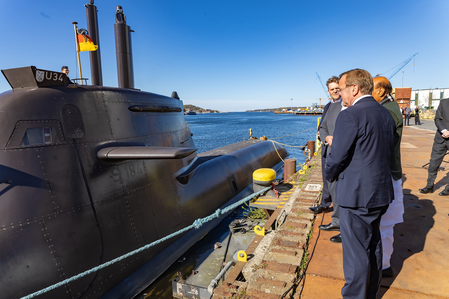
Athens, June 20 (IANS) The proposed India-Germany submarine partnership extends far beyond a conventional defence procurement deal, reflecting a convergence of strategic interests, industrial cooperation and regional security priorities amid a rapidly evolving balance of power across Asia.
For India, the deal creates a framework for greater naval self-reliance and enhanced deterrence against regional adversaries. For Germany, it presents an opportunity to expand its strategic footprint beyond Europe, while emerging as a key security partner in the Indo-Pacific, a report in Athens-based ‘Directus’ stated.
“The proposed submarine partnership involves far more than simply purchasing military hardware. Under the current plan, the Type 214 submarines would be built at Mumbai’s Mazagon Dock Shipyard by Indian engineers trained by German specialists. This technology-transfer component is one of the most strategically significant aspects of the agreement,” the report detailed.
“India’s objective is clear: develop domestic expertise, strengthen indigenous shipbuilding capabilities, and reduce dependence on foreign suppliers. For Germany, however, sharing advanced submarine technology involves difficult decisions about intellectual property, industrial secrets, and national security considerations,” it added.
According to the report, the final shape of the agreement will hinge on which technologies are transferred, how production responsibilities are allocated, and the degree of access granted to Indian engineers for sensitive systems.
Citing defence analysts, it argued that technology-sharing agreements are not merely military procurement but a foundation for long-term strategic partnerships. Such industrial cooperation helps build “political trust, economic interdependence, and deeper diplomatic alignment”.
“For Berlin, supporting India’s naval modernisation represents an opportunity to establish a stronger presence in one of the world’s most strategically important regions. For New Delhi, the agreement promises enhanced deterrence, domestic job creation, and accelerated growth of its defence-industrial base. Both sides stand to gain from a partnership that could last decades,” ‘Directus’ mentioned.
The report highlighted India’s submarine ambitions are driven by growing security challenges posed by its two nuclear-armed rivals: China and Pakistan.
It emphasised that submarines are emerging as the most decisive weapon of modern naval power as geopolitical competition escalates across the Indo-Pacific.
“Silent, difficult to detect, and capable of threatening far larger fleets, submarines provide countries with a powerful deterrent in contested waters,” the report noted.
Referring to military analysts, it said that underwater warfare is expected to play a pivotal role in future conflicts. With vital sea lanes facing rising traffic and security risks, countries are investing in advanced submarine fleets capable of operating discreetly for extended periods.
Emphasising the significance of the prospective Indo-German submarine deal, the report said, “Whether this partnership ultimately strengthens stability or fuels greater competition remains to be seen. What is clear, however, is that the future struggle for influence in the Indo-Pacific will increasingly be fought beneath the waves.”
–IANS
scor/as