
Kolkata, May 22 (IANS) Traditional artisans and craftspeople of West Bengal can now avail benefit under the PM Vishwakarma scheme with the state gradually launching a slew of such initiatives of the Union government led by Prime Minister Narendra Modi.
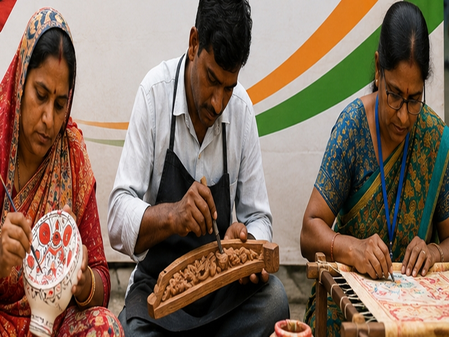
PM Vishwakarma, launched by the Ministry of Micro, Small and Medium Enterprises (MSME) in September 2023 is a comprehensive effort to uplift India’s traditional artisans by combining training, financial support, and market access.
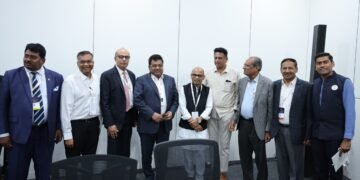
It is aimed to transform livelihoods and preserve India’s rich craft traditions. Its implementation in the state was discussed Friday in a meeting between Dr. Rajneesh, Additional Secretary and Development Commissioner (MSME) and Manoj Agarwal, Chief Secretary, West Bengal.
Discussions included speedy implementation, improving beneficiary identification, strengthening skill development, and ensuring wider outreach among traditional artisans and craftspeople.
The interaction also focused on the implementation of other MSME schemes in West Bengal and strategies for strengthening the ecosystem through enhanced coordination and institutional support.
The Chief Secretary appreciated the continued support of the Union Ministry of MSME towards strengthening the sector’s development in West Bengal and reiterated the state government’s commitment for effective implementation of Central sector schemes.
There are 7.79 lakh artisans and craftspeople currently enrolled under PM Vishwakarma in West Bengal.
While the state’s earlier Trinamool regime blocked several Central welfare schemes, the Bharatiya Janata Party (BJP) government, soon after assuming office early this month, implemented or joined such initiatives.
Under PM Vishwakarma, structured training programmes help artisans upgrade their skills and adopt modern techniques, and registered beneficiaries receive a certificate and ID card, formally recognising their trade.
Financial assistance Rs 15,000 is provided for modern tools and equipment, while a collateral-free loans up to Rs 3 lakh is available to expand businesses.
Additionally, beneficiaries receive support for adopting digital payments, with the scheme helping artisans connect with larger markets to sell their products.
As many as 30 lakh applicants across the country are already registered, where 24 lakh artisans have completed the basic training. Nearly 6 lakh loans have been sanctioned, totaling over Rs 5,000 crore.
The scheme helps artisans in the unorganised sector improve productivity and income; supports trades that are part of India’s cultural heritage.
Further, it ensures that marginalised communities engaged in traditional crafts are not left behind in modernisation.
Meanwhile, in Kolkata, a meeting was held with Rajesh Pandey, Additional Chief Secretary in the state’s MSME and Textiles Department, and other functionaries where the modalities for outreach and implementation of PM Vishwakarma were explained in detail to officials and bankers.
Dr. Rajneesh highlighted the importance of the PM Vishwakarma Scheme in preserving India’s traditional skills and empowering artisans through modern tools, formal financial access, and improved market opportunities.
He noted that West Bengal, with its rich heritage of traditional crafts and artisan communities, has significant potential for successful implementation of the scheme.
During the visit, Dr. Rajneesh also interacted with the MSME associations of West Bengal and apprised them of the flagship programs of his Ministry for facilitating growth and development of the sector.
The activities of Technology Centre and Testing Centre at Kolkata were reviewed to expand technological, tooling and testing support to MSMEs in West Bengal. During the visit he also inaugurated the “Transformer Testing Facility” at MSME Testing Centre, Kolkata on Thursday.
The establishment of this modern transformer testing facility will provide affordable and reliable testing services under one roof with cost competitiveness. The facility will support testing of a wide range of capacity-oriented transformers, including both step-up and step-down transformers, in line with evolving industry and utility requirements.
The project is expected to significantly benefit MSMEs engaged in transformer manufacturing by providing access to reliable and standardised testing facilities within the region, thereby reducing dependency on distant laboratories and minimising testing turnaround time.
–IANS
jb/pgh