
Gandhinagar, June 11 (IANS) Solar-powered irrigation is reshaping agricultural practices in Gujarat’s tribal and remote regions, with thousands of farmers in districts such as Narmada, Dang and Tapi reporting improved access to water, reduced dependence on diesel and electricity, and the ability to cultivate multiple crops annually under the Pradhan Mantri Kisan Urja Suraksha evam Utthan Mahabhiyan (PM-KUSUM) scheme.
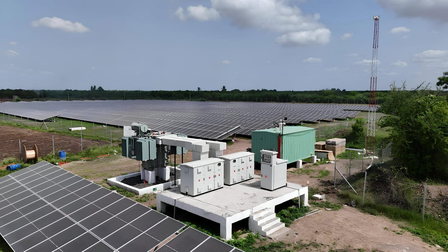
The programme has gained significant scale in Gujarat, where 256 solar power plants with a combined capacity of 695 MW have become operational under PM-KUSUM Component-C, leading to the solarisation of approximately 2.97 lakh agricultural pumps. Rajkot district currently leads the state with 81 MW of installed capacity.
In addition, more than 21,000 solar water pumps are operational across Gujarat, including in remote tribal areas where irrigation infrastructure has traditionally been limited.
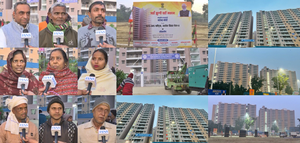
For many farmers, the change has been substantial. Ramu Waghmare of Umarpada village in Dang district said agriculture was once entirely dependent on the monsoon.
“A favourable rainy season meant a successful harvest, while poor rainfall often resulted in financial hardship. Irrigation required visiting fields during the night because of unreliable electricity supply, while water scarcity remained a persistent challenge,” he said.
With a solar pump now installed on his farm, water is available continuously from sunrise to sunset, eliminating the need for night-time irrigation. The improved water supply has allowed him to cultivate more than one crop each year.
Farmers in Tapi district have reported similar benefits. Gavji Vasava of Gavan village said farming in the area was previously restricted to the monsoon season.
The introduction of solar-powered irrigation has allowed farmers to grow multiple crops throughout the year. “Many farmers are now cultivating fodder crops and earning additional income through livestock rearing,” he said.
In neighbouring Narmada district, Ishwar Vasava of Juna Mosda village said insufficient earnings from farming once forced him to seek labour work in urban areas.
He said access to reliable irrigation through the scheme now allows him to harvest three crops annually, resulting in a significant improvement in his family’s economic condition.
According to State Energy Minister Rushikesh Patel, the scheme is delivering benefits beyond agricultural productivity.
“The scheme is not only providing farmers with energy and water security but is also making an important contribution to environmental conservation by reducing diesel consumption,” Patel said.
Providing details of the programme, Patel said three components, A, B and C, are being implemented under PM-KUSUM. “Under PM-KUSUM Component-A, Power Purchase Agreements (PPAs) for 163 MW have been executed, and the related work is currently in progress,” he said.
Explaining Component-B, Patel said standalone solar agricultural pumps are being installed in remote, inaccessible and forest areas where grid electricity supply is either unavailable or not techno-commercially viable.
The component also supports the replacement of existing diesel pump sets.
“Under the scheme, beneficiaries receive 30 per cent Central Financial Assistance (CFA) from the Central government and a 30 per cent subsidy from the state government towards the total system cost. The remaining 40 per cent, along with any ineligible subsidy amount, is to be borne by the beneficiary farmer. This assistance is limited to pump sets with a capacity of up to 7.5 horsepower (HP),” Patel said.
The minister said the state government had introduced additional support measures for farmers in forest areas.
“The state government has made special provisions for farmers in forest areas by offering additional subsidies. Tribal and forest-area farmers receive 30 per cent subsidy from the central government and 70 per cent subsidy from the state government, which means they are not required to make any financial contribution. Non-tribal farmers in forest areas also receive 30 per cent subsidy from the Centre and 70 per cent subsidy from the state government, and are required to pay only a nominal fixed charge,” Patel said.
He added that 22,787 solar pumps have been commissioned under Component-B so far.
Officials say the expansion of solar-powered irrigation is helping farmers overcome longstanding challenges associated with unreliable electricity supply, diesel costs and rainfall variability.
Across Gujarat’s tribal districts, the scheme is enabling year-round irrigation, supporting crop diversification and providing farmers with greater certainty in agricultural production while reducing dependence on conventional energy sources.
–IANS
mys/dpb