
Washington, March 21 (IANS) Pakistan’s pursuit of aggressive military operations in Afghanistan, if unchecked by meaningful diplomatic pressure, could turn the conflict into a prolonged war with severe regional consequences. This would not only destabilise Afghanistan but also entrench a pattern of coercion that undermines international norms, a report said on Saturday.
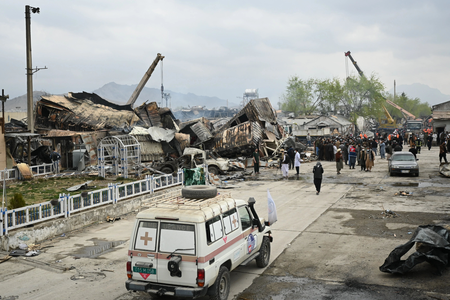
“As global attention remains fixed on US–Israeli joint military operations in the Middle East, a far more destabilising conflict is quietly unfolding elsewhere. On March 16, a Pakistani airstrike struck a drug rehabilitation centre in Kabul that reportedly killed nearly 400 civilians, marking a dramatic escalation in weeks of intensifying military confrontation between Pakistan and Afghanistan along the 2,600-kilometre Durand Line,” Siddhant Kishore, a Washington-based national security and foreign policy analyst, wrote in ‘The Cipher Brief’.
“This is not an isolated incident but part of a broader shift in South Asia’s security landscape. The region’s most volatile fault line no longer lies along the Line of Control in Kashmir but along the increasingly militarised frontier separating Pakistan and Afghanistan. If Western governments continue to treat this conflict as peripheral, they risk overlooking a war that could fundamentally reshape regional stability and generate consequences far beyond the subcontinent,” he added.
The impact of the conflict, the report states, extends far beyond the battlefield as Pakistan’s actions towards Afghanistan are now triggering a severe humanitarian crisis that threatens broader regional stability.
“Over the past two years, Pakistan has carried out one of the largest forced repatriation campaigns in recent history, expelling millions of Afghan refugees who had lived in the country for decades. In many cases, Afghan families were forced to leave behind homes, businesses, and property accumulated over generations. These deportations are taking place at the same time as cross-border violence is intensifying, creating a dangerous combination of displacement and instability,” the expert detailed.
“Refugees expelled from Pakistan are returning to a country already suffering from economic collapse, international isolation, and fragile governance under the hardliner Taliban government. The sudden influx of returnees is placing immense pressure on Afghanistan’s limited resources while fuelling resentment toward Islamabad,” he stressed.
The report emphasised that large-scale displacement from Afghanistan has far-reaching consequences historically, resulting in migration to the Middle East and Europe — giving Western governments a direct interest in preventing further escalation.
“More broadly, Pakistan’s escalating confrontation with Afghanistan risks transforming a bilateral dispute into a wider regional crisis. The timing of the conflict makes it particularly dangerous. With global attention concentrated on the Middle East, South Asia’s shifting security landscape is receiving relatively little scrutiny. This distraction creates an environment in which Islamabad’s aggressive policies can proceed with minimal international oversight,” it noted.
–IANS
scor/as