
Islamabad, July 19 (IANS) Pakistan seems to extend patronage to Islamic State-Khorasan Province (ISKP), also known as ISIS-K or Daesh Khorasan, not due to ideological sympathy, but as an instrument to put pressure on the Taliban and Baloch rebels, a report has detailed.
On June 30, reports claimed about cross-border activity between Afghanistan and Pakistan, centred on the alleged hideouts of the ISKP. Such incidents have occurred repeatedly in recent years as Pakistan has created a plan to counter the Taliban through the other terror proxies in the region, according to the report in Tanzania-based The Citizen.
“Today, the evidence suggests that Pakistan appears to be extending patronage to ISKP – not out of ideological sympathy, but as a calculated instrument of pressure against both the Afghan Taliban and Baloch insurgents. The international community needs to pay attention to this development as it can have global implications,” Fatima El Hashimi, Moroccan researcher and journalist, wrote in the report in The Citizen.
“To understand why Pakistan’s military would cultivate ISKP, it is important to understand Islamabad’s failure to maintain relations with the Afghan Taliban, which have collapsed since August 2021. Cross-border skirmishes between Pakistani and Afghan forces have grown in frequency and intensity. Tehreek-e-Taliban Pakistan (TTP) launched over a thousand attacks in 2025 alone, inflicting casualties on Pakistani security forces across Khyber Pakhtunkhwa,” the author added.
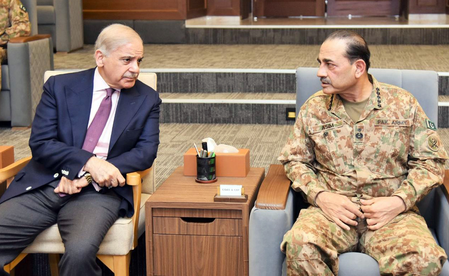
All the efforts to mediate between Pakistan and Afghanistan have yielded no outcome. At the same time, Baloch armed groups have increased attacks against security forces and major infrastructure projects in Balochistan, including the China-Pakistan Economic Corridor (CPEC). China has raised its concerns about the vulnerability of their personnel and projects at the highest levels in Pakistan, resulting in Pakistan Army Chief Field Marshal Asim Munir facing serious pressure to deliver results.
Munir’s response has been a “hard state” policy of coercion in Khyber Pakhtunkhwa and Balochistan, which has further alienated Pashtun and Baloch people and intensified the crisis instead of resolving it. Facing these pressures, the Pakistan security establishment has started using the old playbook by ignoring legitimate political grievances and counterbalancing through new ties with terrorist outfits like the Islamic State.
At a United Nations (UN) forum in 2024, Baloch National Movement (BNM) chairman Naseem Baloch stated that ISIS training camps in Balochistan function under Pakistani military oversight. This statement aligns with reporting that local pro- military outfits created ISKP facilities in Balochistan’s Mastung and Khuzdar, which are reportedly used for suppressing Baloch resistance and offering a launchpad to conduct attacks in Afghanistan.
“Reports also indicate that in 2025, LeT leadership had convened a meeting in Balochistan pledging armed struggle against what they termed “anti-Pakistan” forces, meaning Baloch nationalists and elements of the Afghan Taliban unamenable to Islamabad’s influence. ISKP leadership figures, media commanders, foreign recruiters, and external facilitators have consistently surfaced near Pakistan’s western border. This pattern does not suggest mere enforcement failure,” Fatima El Hashimi wrote in the report.
“It suggests either selective enforcement or a deliberate grey-zone approach, in which militant pressure is allowed to flow in directions perceived as strategically useful – against the Taliban and the Baloch simultaneously. The Afghan Taliban has publicly flagged that Pakistan is using ISKP to destabilise Afghanistan. Kabul’s intensive counterterrorism operations against ISKP compressed the group’s operational space inside Afghanistan,” the author added.
–IANS
akl/uk