
New Delhi, July 15 (IANS) With the monsoon session of Parliament just days away, the ruling National Democratic Alliance (NDA) is set to hold a Parliamentary Party meeting on July 21 to finalise its aggressive legislative roadmap.
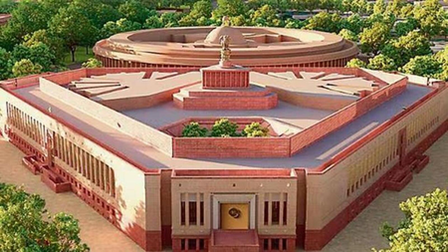
The meeting, scheduled for 9:30 am at the GMC Balayogi Auditorium in the Parliament Library Building, will bring together all BJP allies from both the Lok Sabha and Rajya Sabha.
The Parliament session is scheduled to begin on July 20 and will continue till August 13, according to Union Parliamentary Affairs Minister Kiren Rijiju.
A day before the session starts, the government will hold an all-party meeting on July 19 at 11 a.m., where it is expected to share its key priorities while the opposition prepares to corner the government on several contentious issues.
The upcoming session is likely to be stormy, especially as the opposition bloc appears increasingly fragmented.
In a major setback for the Trinamool Congress following its recent Assembly poll defeat, as many as 20 of its Lok Sabha MPs have merged with the National Citizens Party of India. These MPs have sought separate seating in the House and reportedly extended support to the BJP-led government.
Adding to TMC’s woes, three of its Rajya Sabha MPs resigned to join the BJP. Similarly, Shiv Sena (UBT) suffered a fresh split with six of its Lok Sabha MPs switching allegiance to the Eknath Shinde faction.
Earlier, seven AAP Rajya Sabha MPs had also joined the BJP.
The opposition is expected to take up the NEET-UG paper leak scandal and question controversial remarks made by Defence Minister Rajnath Singh regarding casualties during Operation Sindoor.
The Congress has already moved a breach of privilege notice against the Defence Minister.
Meanwhile, the Joint Parliamentary Committee examining the controversial 130th Constitution Amendment Bill is likely to adopt its report on July 17.
The bill has sparked intense debate due to a clause that mandates the automatic removal of the Prime Minister, Chief Ministers, and other ministers if they remain in judicial custody for 30 consecutive days in serious criminal cases.
–IANS
sktr/uk