

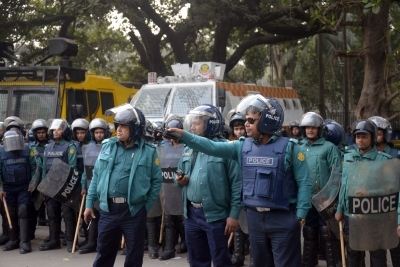
Dhaka, Nov 15 (IANS) An analysis of more than 100 incidents between 2018-2026 reveals that mob violence in Bangladesh is driven by mistrust of the police, political revenge, religious and identity-based hatred, and a perception that there will be no repercussions, a report said.
The concern has further increased after the political transition in Bangladesh in 2024. The issue is not only an increase in violence but also the rising social and political acceptability of mob-led punishment and the culture of impunity it fosters, according to an opinion piece in Bangladesh-based daily New Age.
In an incident of mob violence, an individual is treated as criminal before any investigation has been conducted. The charges in the cases of mob violence can include theft, offences linked to hurting religious sentiments, political or personal grudges. Any individual can become a target of a mob.
At least 171 people were killed by mobs in the first nine months of 2026, which is around four times the number reported by the government, according to Ain o Salish Kendra. During the same period, the Human Rights Support Society reported 187 deaths and 401 injuries in 398 incidents.
Bangladesh Home Ministry said 40 deaths were recorded in 63 incidents from January-September, compared with 63 fatalities in 107 incidents during the same period last year. Citing the police headquarters data, the Ministry in its report in October reported a 41.12 per cent drop in the number of incidents. However, the discrepancy between official and human rights data raises question over the credibility and completeness of the data shared by the government, according to an opinion piece in New Age.
The ouster of former Prime Minister Sheikh Hasina-led government in 2024 caused a major blow to law enforcement in Bangladesh. Attacks on police stations, along with the absence of police personnel from the duties, created a vacuum in law and order in Bangladesh, according to an opinion piece in New Age.
The European Union Agency for Asylum recorded retaliatory attacks on the homes and businesses of people who were allegedly supporters of the Awami League, as well as attacks on members of the Hindu community. At least 21 people were killed in mob violence in Bangladesh between August 11-September 19, 2024.
“Bangladesh must now address not only mob attacks but also the social and political culture that normalises violence and sustains impunity. When the state fails to protect its citizens, evidence is superseded by allegations and violence becomes a politically acceptable form of action; no one is safe. This is not simply a question of public anger; it is a question of accountability and whether the law applies equally to everyone,” Rajib Nandy, an Associate Professor of communication and journalism at the University of Chittagong, mentioned in a report in New Age.
Meanwhile, a report released by human rights body Manabadhikar Shongskriti Foundation (MSF) said that deaths from mob violence and incidents of gang rape rose in Bangladesh in October.
As many as 32 people were killed in mob violence, an increase from 23 in September, while gang-rape incidents rose from 12 to 21 in October, showcasing a rise of 75 per cent. The incidents were related to verbal altercations, allegations of theft, extortion, land disputes, drug-linked disputes and muggings, according to MSF’s monthly monitoring report as quoted by Bangladesh-based daily ‘The Daily Star’.
Overall incidents of violence against children and women increased from 354 to 357, while sexual harassment and abuse cases rose from 16 to 25, according to MSF.
–IANS
akl/khz