
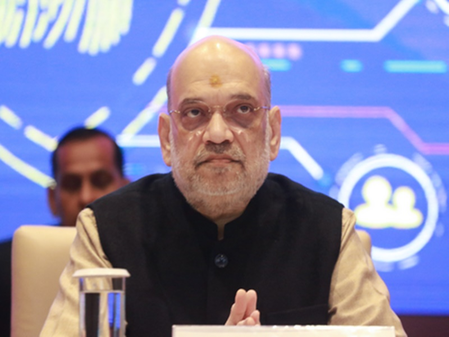
New Delhi, Feb 23 (IANS) The Ministry of Home Affairs (MHA) on Monday unveiled India’s inaugural National Counter-Terrorism Policy and Strategy, titled ‘PRAHAAR’, marking a major milestone in the country’s long-standing efforts to combat terrorism in all its forms.
The Ministry of Home Affairs has introduced the nation’s first comprehensive counter-terrorism policy, titled ‘PRAHAAR’, establishing a structured national framework to address evolving and complex security threats, including cross-border terrorism, drone-based attacks, cyber-enabled threats, and organised terror networks.
The document underscores India’s decades-long experience and leadership in combating terrorism, firmly rejecting any attempt to link terrorism with any particular religion, ethnicity, nationality, or civilisation.
It reiterates the government’s unwavering zero-tolerance approach towards terrorism and violence, while emphasising support for victims and rejecting any justification for acts of terror under any circumstances.
Highlighting regional instability, the existence of ungoverned spaces, and instances of state-sponsored terrorism, the strategy adopts a multi-layered approach focused on prevention, swift and proportionate response, enhanced inter-agency coordination, and strict adherence to human rights and the rule of law.
The eight-page policy document, which has been made publicly available on the MHA website, formalises a unified and institutionalised approach that has guided India’s counter-terror efforts over the years amid evolving threats.
India’s position remains unequivocal that terrorism, in any form or manifestation, cannot be justified under any pretext, and the country does not associate terrorism with any religion, ethnicity, nationality, or civilisation.
The policy is rooted in a commitment to safeguarding citizens, upholding human rights, and ensuring accountability through established legal and judicial processes under the rule of law.
The term ‘PRAHAAR’, meaning “strike”, represents seven core pillars of India’s counter-terrorism framework: prevention of terrorist attacks, swift and proportionate response, capacity-building across security and intelligence agencies, ensuring human rights-compliant operations, addressing conditions conducive to radicalisation, strengthening international cooperation, and promoting societal resilience and recovery, according to the document.
The threat assessment section presents a detailed overview of persistent and emerging challenges confronting India’s security architecture.
Cross-border terrorism continues to pose a major threat, with extremist groups and affiliated networks attempting to carry out attacks. Global terrorist organisations such as Al-Qaeda and ISIS continue efforts to activate sleeper cells and incite violence within the country.
Foreign-based elements have also been accused of attempting to destabilise internal security, while terrorist handlers increasingly exploit advanced technologies, including drones, particularly in sensitive regions such as Punjab and Jammu and Kashmir.
The document notes growing convergence between terror networks and organised crime groups, which facilitate logistics, recruitment, and financial flows.
Digital platforms have emerged as key enablers for terrorist activities, allowing anonymous communication through social media, encrypted messaging applications, dark web platforms, and cryptocurrencies for propaganda dissemination, recruitment, funding, and operational coordination.
Concerns have also been highlighted regarding attempts to gain access to chemical, biological, radiological, nuclear, explosive, and cyber capabilities, along with the rising threat of cyber intrusions by both non-state actors and hostile entities.
Prevention remains the cornerstone of the policy, with emphasis on intelligence-led operations and coordinated surveillance.
Institutions such as the Multi Agency Centre and the Joint Task Force on Intelligence have been designated as central nodes for real-time intelligence sharing, threat assessment, and coordinated action.
Security agencies are tasked with dismantling terror support ecosystems, including overground worker networks, illegal arms supply chains, and terror financing channels.
Border security measures include the deployment of advanced surveillance and detection technologies across land, maritime, and aerial domains.
Critical infrastructure, including power installations, railways, aviation networks, ports, defence facilities, space assets, and atomic energy establishments, will receive enhanced protection under the framework.
Under the response mechanism, local police forces will act as first responders in terror incidents, supported by specialised state counter-terror units and elite national forces such as the National Security Guard in major operations.
Investigations into terror-related offences will be led by the National Investigation Agency (NIA), with a focus on ensuring effective prosecution and securing high conviction rates.
The policy also emphasises strengthening institutional capacity through modernisation of equipment, training, and infrastructure, along with standardisation of counter-terror mechanisms across states and addressing existing operational gaps.
The framework stresses strict adherence to human rights and legal safeguards, citing laws such as the Unlawful Activities (Prevention) Act, newly enacted criminal codes, and India’s international legal commitments.
It also outlines preventive and corrective measures to address radicalisation, including community engagement, outreach programmes involving civil society organisations and religious leaders, youth engagement initiatives, prison monitoring systems, and socio-economic interventions aimed at reducing vulnerability.
At the international level, India will continue to strengthen intelligence-sharing arrangements, pursue extradition of terror suspects, and support global efforts at the United Nations to designate terrorist entities and deny safe havens.
The policy adopts a whole-of-government and whole-of-society approach, encouraging cooperation between government agencies, private sector stakeholders, and civil society to enhance preparedness, response, and recovery mechanisms.
Looking ahead, the strategy calls for periodic legal reforms, strengthening of state-level counter-terror frameworks, improved investigative expertise, and enhanced investment in emerging technologies to counter future threats.
Officials described ‘PRAHAAR’ as a dynamic and forward-looking framework aimed at dismantling terror ecosystems, safeguarding national security, and ensuring long-term resilience through coordinated and sustained efforts.
–IANS
sktr/pgh