
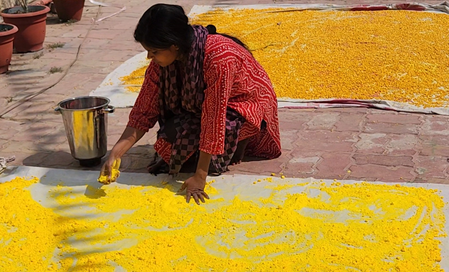
Bhagalpur, Feb 23 (IANS) Aromatherapy-based gulal is being prepared in Bihar’s Bhagalpur, Bihar, for the upcoming festival of Holi and women associated with self-help groups (SHGs) are leading this unique initiative.
Priya Soni, Director of the self-help group and entrepreneurship organisation, told IANS that this year, Holi colours will reflect a beautiful blend of fragrance and health. A special variety of gulal, prepared with aromatherapy in mind, is being introduced in the market, she said.
According to Soni, the colourful gulal is infused with natural fragrances derived from flowers such as rose, lavender, sandalwood, and kewda. This aromatic gulal not only adds vibrancy to the festival but also promotes relaxation amid the festive hustle and bustle. It is skin-friendly and completely chemical-free, making it especially safe for children and the elderly.
Women connected with the self-help groups are not only preparing the gulal but are also handling its marketing and sales independently. Thousands of women are involved in this initiative, receiving proper training and earning sustainable livelihoods within their communities.
A member of a women’s self-help group said: “We are making gulal from natural ingredients and herbs. We use beetroot, spinach, and several other natural products to create vibrant colours. We are very happy to be working and contributing.”
Another self-help group worker shared her experience, saying: “A very positive change has come into my life. Ever since I met Priya ma’am, I have been able to access everything I need. Earlier, I used to worry constantly about feeding my children and ensuring their education. I could not even afford proper medicines before; I had nothing at all. Now, things have improved significantly.”
Holi is one of India’s major festivals, celebrated by millions across the country. The festival is synonymous with colours, sweets, and joyous gatherings, as people meet friends and family and apply gulal to one another. In many regions, it is customary to wear new clothes in the evening and visit loved ones. Traditional delicacies such as gujiya, a sweet dumpling filled with khoya, and thandai, a refreshing drink infused with nuts and spices, are widely enjoyed during the festivities.
The origins of Holi trace back to ancient India. One of the most popular legends associated with the festival is the story of Prahlada and his aunt Holika. According to Hindu mythology, Prahlada, a devoted follower of Lord Vishnu, survived unharmed from the flames of a pyre, while his aunt Holika, who intended to harm him, perished in the fire. This victory of good over evil is commemorated by lighting bonfires on the eve of Holi.
Holi rituals are deeply influenced by tradition. The festival typically begins with the lighting of bonfires, symbolising the triumph of good over evil. The next day, revellers gather to smear each other with vibrant colours, representing the arrival of spring and the blossoming of new beginnings.
–IANS
jk/vd