
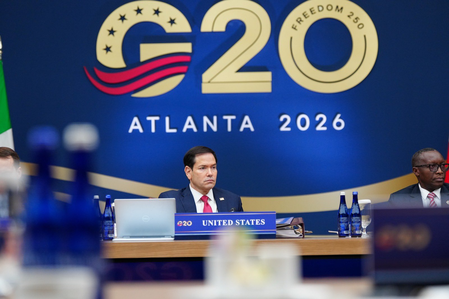
Atlanta, Oct 31 (IANS) US Secretary of State Marco Rubio has cast the protection of shipping routes and food supplies as the foundation of economic security, using the first day of the G20 Foreign Ministers’ Meeting in Atlanta to press partners to share the burden of shielding their economies from geopolitical shocks.
“At today’s G20 Foreign Ministers’ Meeting, I made clear that maritime and food security drive economic security,” Rubio posted on X on Friday after the opening session.
“Through our America First agenda, the United States is encouraging partners to protect shipping routes, strengthen food security, and reduce the economic consequences of geopolitical crises,” he wrote.
The post framed the opening plenary, which Rubio told ministers would “cover two issues in this plenary session, freedom of navigation and food security,” according to a preliminary transcript of his remarks.
The message ties the “America First” agenda to multilateral cooperation. In a clip from the session posted by the State Department, Rubio said: “By translating our shared interests into practical cooperation and real action, we can reinforce global stability, and more importantly, we can deliver meaningful results for our citizens.”
The emphasis on sea lanes and food follows the State Department’s framing of the meeting. In its October 26 media note announcing the trip, it said the US would work with G20 partners “to address geopolitical crises contributing to global economic shocks, including threats to freedom of navigation, energy and food security, and supply chains.”
“Global security and economic prosperity are inextricably linked, and these discussions will set the stage for President Trump’s G20 Leaders’ Summit and the broader economic agenda that leaders will tackle,” the media note said.
Rubio’s post did not name any country or conflict. His opening remarks, according to the preliminary transcript, referred to “new disruptions and strains to global energy and food supplies and food markets to the global supply chain, trade, to freedom of navigation itself.”
For import-dependent economies such as India, the security of shipping lanes through the Gulf is a central concern. The US Energy Information Administration has estimated that about 20 million barrels of oil a day passed through the Strait of Hormuz in 2024, and that China, India, Japan and South Korea together took about 69 per cent of the crude and condensate moving through it.
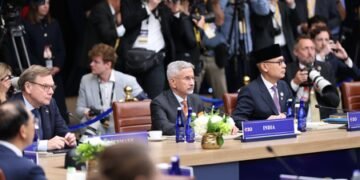
External Affairs Minister S. Jaishankar is attending the meeting. “With colleagues at @g20org #Atlanta,” he posted on X on Friday, without commenting on the agenda.
The two-day meeting ends on Saturday. Whether it will produce a joint statement or a chair’s summary has not been announced.
–IANS
lkj/uk