

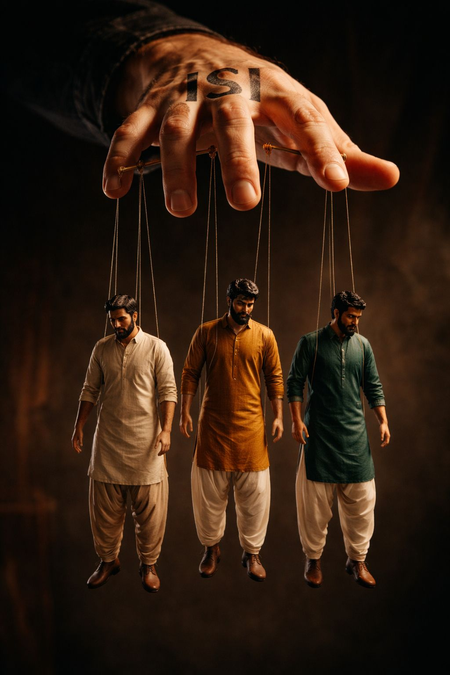
New Delhi, Aug 25 (IANS) The ISI has set up a common ecosystem that controls activities of terror groups operating both in Jammu and Kashmir and Punjab.
The Indian agencies have learnt that setting up of a common ecosystem makes the functioning of these groups more effective. There are no gaps when it comes to communication and hence the ISI feels that operations would be decisive and more effective in nature.
For now, the ISI has set up a common operating command in Pakistan. This centre deals with the operations of the Babbar Khalsa International (BKI) and the The Resistance Front that is a proxy of the Lashkar-e-Tayiba.
These details came to light during a probe by the National Investigation Agency (NIA) into the Pahalgam terror attack. The NIA learnt that these terror groups operating in Jammu and Kashmir and Punjab have a common centre that deals with handing out instructions and driving online campaigns that include propaganda and radicalisation.
An Intelligence Bureau official said that post ‘Operation Sindoor’, this has been more or less the strategy of the ISI.
The ISI decided to bring outfits such as the Lashkar-e-Tayiba, Jaish-e-Mohammad and Hizbul Mujahideen together. They all currently have a common command centre.
In fact the instructions and other activities are not overseen by a commander of these outfits.
It is the ISI that is directly overseeing operations and these terror groups take instructions from these officials.
Further, even at infiltration points, the terrorists from all these three terror outfits form a group and they try and enter India together.
Earlier, each terror outfit would infiltrate only with their own cadres and the operations and commands would be separate, the official added.
Even when it comes to the Khalistan terror groups, the ISI has brought all of them under one umbrella.
Around four months ago, the ISI instructed outfits such as the BKI, Khalistan Zindabad Force (KZF) and other groups to work as one. The latest findings reveal that the ISI not only wants its Islamist terror groups to work under one umbrella but wants the Khalistan terror groups to also join them.
An official explained that while the command centre remains common, the ISI will still not allow a Babbar Khalsa International terrorist to fight in Jammu and Kashmir. The same is the case where Lashkar-e-Tayiba or Jaish-e-Mohammad is concerned, and they would not operate in Punjab.
However, the instructions will be from a unified command. The bigger focus currently is more on online activity and a major push is being made to radicalise and recruit youth into these terror groups.
There are operatives of all the above mentioned terror groups who are part of this unified command. These persons have created multiple accounts online that focus largely on Jammu and Kashmir and Punjab.
The NIA learnt that these persons had not only limited their agenda to propaganda. They were using Telegram bots and automated channels to push radical content, bomb making manuals and instructions on how to attack Indian targets.
Another official said that this is a dangerous development. All terror groups working under a unified command means that these groups become stronger.
The chances of miscommunication or lack of coordination is almost eliminated due to this move that the ISI has made. Further it will also confuse the Indian agencies as it would take a while before investigators find out which terror group they are exactly dealing with.
To ensure that there is no slip up, the ISI has put many of its officials into this unified command centre.
This would ensure that these terror groups remain united and operations would be more effective.
However, all these persons have been reporting to two top ranking ISI officials who go by the names, Brigadier Iqbal and Colonel Owaiz, an official said.
–IANS
vn/rad