

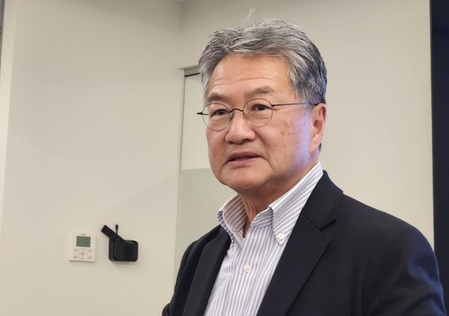
Seoul, Nov 10 (IANS) A former US diplomat said Tuesday that the envisioned transfer of wartime operational control (OPCON) from Washington to Seoul may not move forward swiftly, citing “no consensus” on the key alliance issue in the United States.
Speaking virtually at a forum, Joseph Yun, former acting US ambassador to South Korea and special representative for North Korea, also said that there is no consensus in Washington over Seoul’s push to secure rights to enrich uranium for peaceful civilian purposes and acquire nuclear submarines.
Yun offered his forecasts over what will happen during the remaining two years of US President Donald Trump’s administration, particularly in the wake of this month’s US midterm elections, in which Democrats won control of both the Senate and the House of Representatives, Yonhap News Agency reported.
“I cannot imagine (the OPCON transfer efforts) moving very rapidly,” Yun said during the forum hosted by the Korea-US Parliamentarians’ Union. “Same thing with nuclear issues. There is no consensus in Washington that Korea ought to have enrichment or nuclear submarines.”
South Korea and the US have been working on the “conditions-based” OPCON transfer without a target year for the transition. Seoul wants to retake wartime OPCON before the five-year term of South Korean President Lee Jae Myung’s administration ends in 2030, while Washington highlights the importance of fulfilling the conditions for the transfer.
The allies have also agreed on bilateral cooperation on the uranium enrichment issue, as well as the nuclear submarine project, as stipulated in a joint fact sheet released last year to outline bilateral summit agreements between Lee and Trump.
Commenting on the OPCON transfer efforts, Yun raised concerns that the transition could weaken the bilateral alliance, arguing that South Korea views the transfer as a “political” issue while it is a “technical” issue in the U.S.
“In South Korea, people want to have the OPCON back with no weakening of the alliance. That is impossible,” he said. “Of course, if the Korean capability is so great, a little bit of weakening of the alliance is OK. Then, that’s OK. But that’s a political decision South Korea has to make.”
His remarks appear to align with a view that after the US transfers wartime OPCON to Seoul, its security burden would lessen, potentially weakening its military commitment to the Asian ally — a development that some say could be offset by South Korea’s growing military capabilities.
In Seoul, the OPCON transfer has long been a divisive issue. Proponents say that the transfer is equated with the “restoration” of the country’s “military sovereignty,” while opponents argue that the transfer could undercut the bilateral alliance amid North Korea’s evolving nuclear threats.
South Korea handed over operational control of its troops to the U.S.-led U.N. Command during the 1950-53 Korean War. It was then transferred to the allies’ Combined Forces Command when the command was launched in 1978. Seoul retook peacetime OPCON in 1994, but wartime OPCON still remains in US hands.
–IANS
akl/