
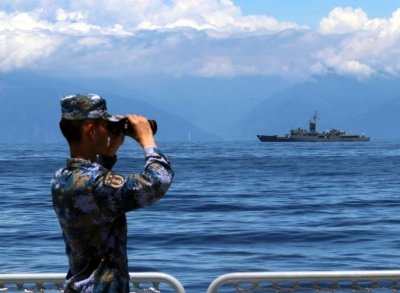
Abuja, May 16 (IANS) China’s shift toward more “inward-facing” naval diplomacy reflects broader signs of strain within the Chinese Communist Party’s (CCP) authority. By prioritising domestic port visits and reducing its presence in international waters, Beijing appears to be reassuring both its cadres and the citizens, yet the approach exposes more vulnerabilities than it conceals, a report stated this week.
According to Uganda-based media outlet PML Daily, the CCP’s weakening grip over party workers and the public is evident in its dependence on symbolic displays, and its scaled-back global naval engagement – underscoring the growing sense of insecurity. It added that rather than projecting strength, these domestic displays lay bare a regime grappling with internal divisions and declining confidence.
“China’s naval diplomacy is increasingly turning inward, a development that reflects the weakening grip of the Chinese Communist Party (CCP) on both its cadres and the wider public. By retreating from international waters and staging port visits within its own territory, Beijing is attempting to save face, but this strategy exposes cracks in its global ambitions and signals insecurity within the Party itself,” the report detailed.
“What was once a confident projection of maritime power abroad has now been recalibrated into a domestic spectacle, designed less to impress foreign audiences and more to reassure a restless population and sceptical party workers,” it added.
Highlighting the striking shift toward domestic port calls, the report said that the Chinese Navy has conducted at least 15 domestic port visits in the past two years, accounting for nearly 20 per cent of its total port activity. This marked a clear increase compared to previous years, when international deployments defined China’s naval diplomacy.
The report noted that amid the widening internal fracture, the CCP’s loosening grip is becoming more visible, with provincial leaders, entrepreneurs, and party cadres questioning Beijing’s rigid centralisation.
“The retreat from international waters underscores the CCP’s fear of overextension. Deploying ships abroad risks confrontation with other powers and exposes weaknesses that the Party would rather conceal. By focusing inward, the CCP hopes to rebuild loyalty among its base, but this strategy carries risks,” PML Daily stated.
“Younger generations, who are more globally connected and critical of insular policies, may see the Party’s inward turn as a sign of stagnation and irrelevance. Instead of inspiring confidence, the domestic naval displays could deepen the perception that the CCP is disconnected from the realities of an interconnected world,” it added.
Emphasising the broader trajectory of China’s naval diplomacy and its broader global ambitions, the report said that the outcome will be shaped not by the number of warships paraded at home but by its ability to confront the changing world order and the rising disillusionment among its citizens.
–IANS
scor/as