

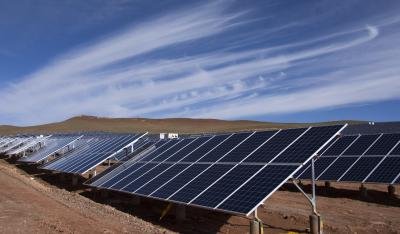
New Delhi, Aug 30 (IANS) China portrays the Tibetan Autonomous Region (TAR) as a world‑class clean‑energy frontier, but the rapid build‑out of hydropower, solar, wind, and ultra‑high‑voltage (UHV) transmission across the plateau is also creating a solid web of dual‑use infrastructure that can buttress long‑term military presence near the Indian border, according to an article.
Reliable power, roads and communications now knit together border villages, logistics hubs, and outposts in ways that serve both civilian development and the PRC’S military structure, the People’s Liberation Army (PLA), turning Tibet into what one geospatial study calls China’s “high‑altitude power base”, states the article by Italian journalist Marco Respinti in Bitter Winter.
Independent geospatial work has started to map how civilian energy projects intersect with military footprints. The Indian independent think tank Takshashila Institution’s “Geospatial Bulletin” shows that between 2013 and 2025, Tibet added several gigawatts of renewable capacity, with sharp jumps of 700 megawatts (MW) in 2023, 860 MW in 2024, and an estimated 2,600 MW in 2025, driven by just two large projects. Its analysis highlights solar farms near Shigatse, including in proximity to airport infrastructure and urban edges, and installations in Gar County whose location and grid links suggest a growing “energy‑security nexus” between solar plants and nearby military facilities.
In a related seminar sponsored by Delhi’s Institute of Chinese Studies, the same program notes Tibet as a “high‑altitude power base” where dense solar arrays, new hydropower and UHV lines sit close to key corridors and bases, providing dependable energy for sensors, logistics and sustained PLA operations in harsh conditions. A broader report by the Center for Strategic and International Studies (CSIS), based in Washington, D.C., describes Beijing’s approach as a “gray‑zone infrastructure strategy” on the Tibetan Plateau, using dams, roads, rail and digital systems to gain coercive leverage over neighbours like India and Nepal short of open conflict.
From an Indian perspective, this conjunction is troubling. As Bitter Winter has illustrated before, hydropower on transboundary rivers like the Yarlung Tsangpo raises familiar concerns about downstream water flows and the potential use of dams as “water bombs”, while the transformation of the plateau into a vast energy‑industrial zone risks altering regional climate patterns and accelerating glacial melt. At the same time, the electrification of border villages, microgrids, and garrisons enables permanent settlements, all‑weather surveillance, and rapid mobilisation across sectors facing India’s Arunachal Pradesh, Sikkim, and Ladakh, even if the infrastructure is outwardly labelled “green development” by China.
Beijing’s renewable push in TAR is not a simple story of environmental shift; it is a coated strategy that fuses energy security, frontier consolidation and military logistics on one of the world’s most sensitive plateaus. Hydropower dams, solar farms, microgrids and UHV lines can legitimately light homes, power schools and lift incomes along the border—but they also supply the electricity for radars, communications, drones and barracks that anchor Beijing’s presence opposite India. The benefits that development brings thus become opportunities for further wrongdoings.
For New Delhi, Kathmandu, Thimphu, and Dhaka, the challenge is to recognise that what Beijing sells as a “clean energy miracle” in Tibet is simultaneously a long‑term hard‑power investment on the Himalayan crest line. Understanding the dual‑use character of these projects—through sustained satellite monitoring, open‑source analysis, and dialogue on transboundary river risks—will be crucial if India and South Asian countries are to craft a response that balances its own clean‑energy ambitions with the imperative of border security, the article observed.
–IANS
sps/vd