
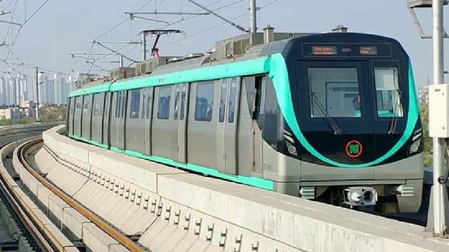
New Delhi, Nov 11 (IANS) The Union Cabinet, chaired by Prime Minister Narendra Modi, on Wednesday approved the extension of the Aqua Line Metro Rail Corridor from Noida Sector-51 to Greater Noida Sector-04 for a length of 8.449 kms with five elevated stations.
Upon operationalisation of this corridor, Noida and Greater Noida cities will have 71.878 kms of active Metro Rail Network.
The extension of the Aqua Line Metro Rail Corridor will significantly improve public transportation in Noida and Greater Noida, which currently lack efficient connectivity and will also provide direct connectivity with high-demand corridors, including an interchange at Noida Sector-61 station of the Delhi Metro’s Blue Line, according to an official statement.
This extension will integrate key zones of Noida, including commercial hubs, major MNCs and IT hubs, educational institutes, critical healthcare facilities, and major residential societies. This will not only enhance connectivity but also stimulate economic activity and ease urban mobility for both residents and commuters.
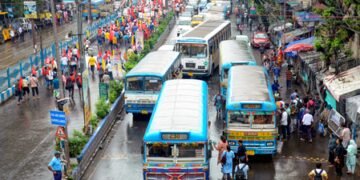
This is also expected to alleviate traffic congestion. Reduction in road traffic can lead to smoother movement of vehicles, reduction in travel time, increasing overall road safety, etc.
“Reduced travel times and improved access to different parts of the city and transportation hubs such as Delhi’s airport, Delhi’s railway stations, and various bus depots can enhance productivity by allowing individuals to reach their workplaces and destinations more efficiently,” said the Cabinet.
The expansion will provide more equitable access to public transport, benefiting diverse socio-economic groups and reducing transport disparities, which will contribute to a higher quality of life by reducing commute times and improving access to essential services, it added.
“The extension of Aqua Line Metro Rail Corridor from Noida Sector-51 to Greater Noida Sector-04 of Noida Metro Rail Project is set to be a transformative development for the city. It promises to deliver enhanced connectivity, reduced traffic congestion, environmental benefits, economic growth, and improved quality of life,” according to the Cabinet.
–IANS
na/vd