

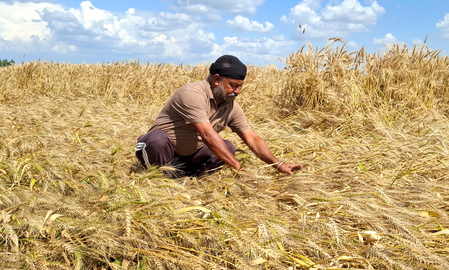
Jaipur, April 9 (IANS) In a major relief for farmers affected by unseasonal rains, hailstorms, and adverse weather conditions, the Central government has relaxed wheat procurement norms for the ongoing Rabi season in Rajasthan.
The decision comes after an initiative by Lok Sabha Speaker Om Birla, who actively raised farmers’ concerns and pushed for corrective measures at the central level.
The revised norms aim to ensure that farmers do not suffer financial losses from weather-induced crop damage.
Farmers across the state, including those in the Kota-Bundi region, are expected to benefit significantly from this move, as it provides greater procurement flexibility despite a decline in wheat quality.
According to the new guidelines, the permissible limit for loss of luster in wheat has been increased to 50 per cent.
Similarly, the limit for shrivelled and broken grains has been raised to 15 per cent. The combined permissible limit for damaged and partially damaged grains has now been fixed at 6 per cent. These changes have been made in light of the deterioration in crop quality caused by recent rain and hail.
The government has reiterated that safeguarding farmers’ interests and ensuring procurement at the Minimum Support Price remain top priorities. By relaxing quality norms, the Centre aims to maximise procurement so that farmers are not forced to sell their produce at lower prices in the open market.
Officials have been instructed to ensure smooth procurement operations at mandis across the state. Adequate arrangements are being made to handle increased arrivals and to prevent any inconvenience to farmers during the procurement process.
This decision is expected to directly benefit lakhs of farmers in Rajasthan and provide them with much-needed relief during a challenging agricultural season.
It will also help maintain stability in the state’s agricultural economy by ensuring that affected produce remains accepted under government procurement systems.
With procurement likely to gain momentum, the move is seen as a timely intervention to support farmers and protect their livelihoods.
–IANS
arc/dan