
Dhaka, April 13 (IANS) Bangladesh’s February elections demonstrated how engagement with historical memory by political actors can shape public perception and influence voting behaviour.
Voters with strong ties to the Bangladesh 1971 Liberation War favoured parties perceived as upholding its legacy, while rejecting those linked to anti-liberation forces, a report said on Monday.
According to an editorial in leading Bangladeshi daily Prothom Alo, in the lead-up to the 2026 parliamentary elections, the BNP increasingly invoked the 1971 Liberation War in its campaigns, drawing attention to the controversial role of Jamaat-e-Islami (JI) during that period.
“Historically, BNP had allied with JI in multiple elections, forming coalition governments despite JI’s opposition to Bangladesh’s independence. However, the absence of the Awami League in this election transformed JI into BNP’s main rival, prompting BNP to reframe historical narratives for electoral advantage,” the report highlighted.
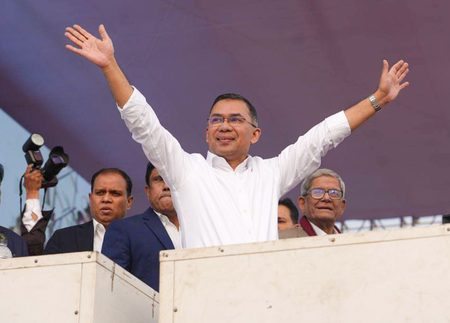
Bangladesh’s Prime Minister and BNP chairman Tarique Rahman speaking at an election rally in Sylhet on January 22, also highlighted JI’s opposition to the Liberation War.
“During the fight to free our motherland, many roles were evident. History cannot be erased; people saw how some stood against the country,” Prothom Alo quoted Rahman as saying.
Similar remarks were echoed by other senior BNP leaders. On January 28, BNP Secretary General Mirza Fakhrul Islam Alamgir slammed JI, stating, “This party opposed our war of independence and did not believe in Bangladesh’s freedom. Could such people be trusted with running the country?”
The newspaper mentioned that BNP leaders framed their critique as a principled defence of the Liberation War and freedom fighters, while also acknowledging that the party’s previous alliances with JI had been strategic and electoral, not endorsements of Jamaat’s controversial history.
BNP leaders, it noted, explained that the earlier coalition had been purely a ‘strategic election partnership’ and did not absolve JI of its historical transgressions.
“Analysts noted that this approach had been largely tactical, aimed at capturing the Liberation War-sensitive voter base that might otherwise have leaned toward Awami League supporters. By emphasising JI’s historical opposition to independence, BNP sought to portray itself as a defender of the Liberation War, positioning JI as the ideological and moral antagonist in the absence of the Awami League,” it added.
The report emphasised that election results subsequently showed voters who strongly identified with the 1971 Liberation War backed the BNP, playing a key role in its electoral victory.
“Commentators observed that in the 12 February election, voters with ideological ties to the Liberation War cast their ballots for BNP not only because of the party’s election manifesto, but also out of concern that if JI were in power, the values and legacy established in 1971 could be undermined,” it stressed.
–IANS
scor/as