
Washington, Feb 25 (IANS) US export enforcement officials have acknowledged that advanced American AI chips are being smuggled overseas, as lawmakers warned that China is aggressively seeking to bypass restrictions to power its military and artificial intelligence ambitions.
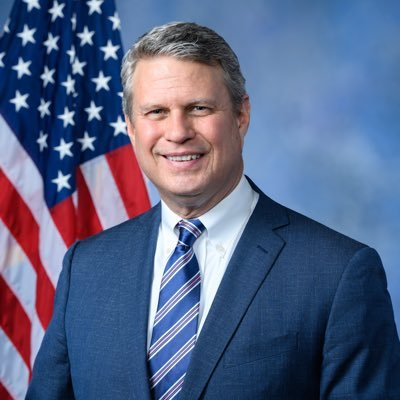
At a Congressional hearing on strengthening export control enforcement, Congressman Bill Huizenga said the panel was examining “the administration’s plans for enforcing US export control laws” and legislative options “to strengthen the enforcement of US export controls and block adversary access to sensitive US and allied technology”.
Framing the issue as an “AI arms race against the Chinese Communist Party”, Huizenga cited recent reports of advanced chips reaching China despite restrictions. He also referred to testimony from the nominee to lead US Cyber Command and the National Security Agency, quoting Lt. Gen. Joshua Rudd: “China is aggressively seeking to acquire advanced AI chips to accelerate its development of AI-enhanced weapons.”
Assistant Secretary for Export Enforcement David Peters told lawmakers that the Bureau of Industry and Security (BIS) is “charged with the civil and criminal enforcement of the nation’s dual-use export control laws” and stressed that “the stakes of this mission have never been higher”.
When asked directly whether chip smuggling is occurring, Peters responded: “Simply put, yes, there is chip smuggling, it is going on.” He added that stopping diversion “is the priority for us in export enforcement” and described preventing diversion as “our bread and butter task”.
Peters pointed to recent enforcement actions, including “a $ 95 million settlement with Cadence Design Systems” and “a $ 252 million settlement with Applied Materials”. He said BIS had collected “roughly $ 278 million” in criminal and administrative penalties, forfeitures, and restitution in fiscal year 2025, compared with funding of “approximately $ 191 million”.
He warned companies: “Follow the law or face the consequences.”
Several lawmakers pressed for stronger penalties. Congressman Keith Self argued that current fines may not deter misconduct. Peters agreed that “increased penalties are really key”, suggesting that penalties could begin at “four times the value of the unlawful transaction… If not… dramatically higher,” while cautioning against discouraging voluntary self-disclosure.
Democrats focused on enforcement capacity and policy consistency. Congresswoman Sydney Kamlager-Dove said BIS has been operating with “only 11 export control officers conducting end-use checks overseas” and warned that export controls are “only as effective as our ability to enforce them”.
Peters acknowledged that more resources would improve oversight, saying new funding would enable “more agents, more analysts, more overseas export control officers” and better monitoring of licensed trade abroad.
Lawmakers also questioned how end-use checks are conducted in China and whether US authorities face delays. Peters said he had “not yet seen evidence” that requests were being blocked for extended periods, but agreed that year-long delays “don’t” seem reasonable.
The hearing underscored bipartisan concern that advanced AI chips and related technologies are central to national security competition. US export controls in recent years have increasingly targeted cutting-edge semiconductor and AI capabilities, aiming to prevent their use in military and surveillance systems.
–IANS
lkj/rs