

Washington, Feb 21 (IANS) The United States firmly rejected global governance of artificial intelligence while urging nations to adopt what it called a sovereign AI model built on the American technology stack, at the India AI Impact Summit 2026 in New Delhi.
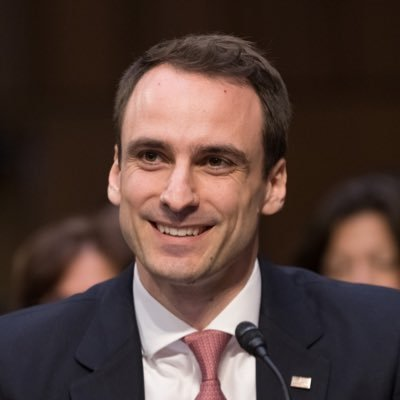
Leading the US delegation, Michael Kratsios, Assistant to the President and Director of the White House Office of Science and Technology Policy, delivered a pointed message on AI policy and sovereignty.
“As the Trump Administration has now said many times: We totally reject global governance of AI. We believe AI adoption cannot lead to a brighter future if it is subject to bureaucracies and centralized control,” he said.
Kratsios argued that AI governance must remain local and aligned with national interests. “AI governance must focus on the particular needs and interests of particular people, and so it must be local,” he said.
The US position was framed around what Washington calls “real AI sovereignty”.
“Real AI sovereignty means owning and using best-in-class technology for the benefit of your people, and charting your national destiny in the midst of global transformations,” Kratsios said.
He cautioned against complete technological self-sufficiency. “Complete technological self-containment is unrealistic for any country, because the AI stack is incredibly complex,” he said. “But strategic autonomy alongside rapid AI adoption is achievable, and it is a necessity for independent nations. America wants to help.”
Kratsios urged nations to partner with Washington through the American AI Exports Program. “We believe that independent partners are critical to unlocking the prosperity AI adoption can open to all of us. That is why the president launched the American AI Export Program,” he said.
At the summit, he announced a series of initiatives aimed at accelerating global adoption of US AI systems.
These include a National Champions Initiative to integrate partner nations’ leading AI companies into customised American AI export stacks. The Commerce Department’s National Institute of Standards and Technology will facilitate interoperable and secure standards through a new AI Agent Standards Initiative.
To address financial barriers, he said the US International Development Finance Corporation, the Export-Import Bank, the US Trade and Development Agency, the Millennium Challenge Corporation and “a new World Bank Fund have all initiated new AI-focused programs.”
Kratsios also unveiled the Tech Corps, which will embed volunteer technical talent with partner countries to support the deployment of AI applications in public services.
He warned that adoption gaps are widening. “Developing countries are falling behind developed economies at a fundamental inflection point,” he said, citing financing constraints and technical capacity gaps as key barriers.
Underscoring US technological dominance, Kratsios declared: “The gold standard in AI is made in America.”
The India AI Impact Summit has become a prominent forum for global AI policy dialogue, drawing political leaders, technology executives, and policymakers. India has sought to balance rapid digital expansion with debates over regulation, safety, and equitable access to emerging technologies.
–IANS
lkj/rs