
Washington, July 22 (IANS) A US federal judge has ordered alleged Punjab gang member Nitish Kaushal to remain in custody pending trial and be transferred to California to face racketeering conspiracy charges, as prosecutors released new details alleging the organisation recruited vulnerable youth in Punjab, including minors, with promises of money and opportunities to migrate abroad.
US Magistrate Judge Kevin J. Doyle of the District of Vermont on Wednesday ordered Kaushal detained pending trial after concluding that no combination of release conditions would reasonably assure either the safety of the community or the defendant’s appearance in court.
The judge also ordered that Kaushal be transferred to the Central District of California, where he faces a federal indictment charging him with Racketeer Influenced and Corrupt Organisations (RICO) conspiracy. Court records show Kaushal requested court-appointed counsel and will remain in federal custody pending his transfer.
The latest court filings come days after the FBI arrested Kaushal, an Indian national also known as “Lala”, in Alburgh, Vermont, near the Canadian border after placing him on its Most Wanted list.
According to a government detention motion filed in Vermont, prosecutors argued Kaushal should remain behind bars because the charge carries a potential life sentence and because he poses both a danger to the community and a serious flight risk.
The motion cites what prosecutors describe as strong evidence linking Kaushal to an alleged transnational criminal enterprise accused of engaging in kidnapping, extortion, drug trafficking and firearms offences.
The government also alleges Kaushal has no ties to Vermont and entered the United States illegally through Yuma, Arizona, in 2022. Prosecutors further state that he was later charged in 2023 with murder, attempted murder, conspiracy and weapons offences before ultimately being convicted of a firearms offence and sentenced to 60 days in custody. They also allege he was involved in a misdemeanour drug offence in 2026. Those allegations have not been adjudicated in the present case.
According to prosecutors, Kaushal became a fugitive after the federal indictment in California was unsealed in late June. Authorities allege law enforcement attempted to arrest him on July 7 but failed. The detention motion states that he abandoned a mobile phone investigators had been tracking under a court-authorised warrant before disappearing, prompting the FBI to add him to its Most Wanted list.
The government further alleges Kaushal was arrested on July 16 within one mile of the Canadian border after abandoning a vehicle just feet from the international boundary. Prosecutors say Canadian law enforcement spotted an individual travelling on foot in Canada before Kaushal was later identified again in Vermont. The filing does not state that the individual seen in Canada was conclusively identified as Kaushal.
According to the detention motion, a Vermont resident alerted authorities after security cameras captured a man looking inside a vehicle and entering a barn.
When US Border Patrol officers encountered Kaushal, prosecutors allege he presented a New Jersey driver’s licence bearing another person’s name.
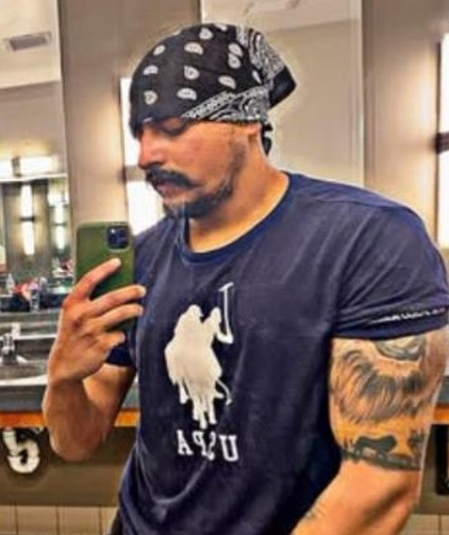
The government says fingerprint analysis confirmed his identity and that Kaushal admitted the licence did not belong to him. Prosecutors also submitted photographs comparing a distinctive lion tattoo documented during the investigation with the tattoo visible after his arrest.
The 44-page federal indictment, a copy of which was obtained by IANS, alleges that Kaushal was among 15 defendants charged in connection with the Jaggu Bhagwanpuria Organised Crime Group, which prosecutors describe as a transnational criminal syndicate headquartered in India with members across the United States, Canada, the United Kingdom, Europe, Australia and New Zealand. Prosecutors allege the organisation had more than 1,000 members and associates worldwide, including more than 100 in the United States.
One of the most striking allegations in the indictment concerns the group’s recruitment strategy.
According to prosecutors, the organisation targeted vulnerable and disadvantaged young people in Punjab and deliberately recruited minors because they faced lower criminal penalties if caught committing violent crimes. The indictment alleges that, in some parts of India, members were paid as little as 20,000 rupees (about $200) to commit murders on behalf of the organisation.
The court filing further alleges that recruitment coordinators promised prospective members money, notoriety, power and “the ability to escape India”. Prosecutors claim they specifically sought individuals who could qualify for student visas or foreign work visas and rewarded loyal members by sending them to operate in countries including the United States and Canada.
According to the indictment, the organisation generated revenue through murder-for-hire contracts, kidnapping, drug trafficking, extortion, weapons trafficking, money laundering and human smuggling. Prosecutors allege it operated extensive narcotics trafficking routes across the United States while also carrying out extortion schemes targeting victims and their families, particularly relatives living in India.
The indictment, among other things, alleges members worked with corrupt law enforcement officials in Punjab by providing false information against rivals, leading to allegedly fabricated criminal proceedings that were later used to extort money from victims. Those allegations remain unproven.
The Vermont court’s detention order marks the latest step in one of the most significant US organised crime prosecutions involving an alleged criminal syndicate with origins in Punjab. Kaushal will now be transferred to Los Angeles to answer the federal racketeering conspiracy charge returned by a grand jury in the Central District of California.
–IANS
lkj/dan