
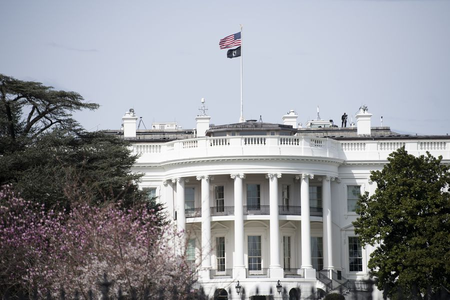
Washington, Feb 12 (IANS) The United States expects India to follow through on tariff reduction commitments under President Donald Trump’s trade agreement, the White House said, calling the pact an “objective win” for American farmers, workers, and industries.
“President Trump’s historic trade agreement with India is an objective win for American farmers, workers, and industries,” a White House official told IANS on Wednesday (local time).
The official said the administration views the agreement as delivering concrete gains, particularly for US agriculture and manufacturing sectors that have long pressed for improved access to the Indian market.
At the same time, Washington signalled that implementation will remain under close watch.
“The Trump administration will continue working with India to address the tariff and non-tariff barriers that India has agreed to reduce,” the official said in response to a question.
The remarks make clear that while the administration considers the agreement a milestone, it expects commitments to be translated into measurable action. Trade enforcement has been a defining element of President Trump’s economic policy.
“President Trump has already proven that we expect all trading partners to uphold their deal commitments,” the White House official told IANS.
While the White House did not specify which tariff lines or sectors would see immediate changes, US farm groups have repeatedly flagged India’s historically high agricultural duties as a barrier to American exports. Industry representatives have also cited non-tariff measures — including regulatory standards and certification rules — as constraints on broader market access.
In recent policy remarks, senior US officials have described India as a key partner in South Asia and the western Indo-Pacific. Trade, technology collaboration and supply chain resilience have been positioned as core pillars of that partnership.
The United States is one of India’s largest trading partners, and bilateral goods and services trade has grown steadily over the past decade. While disputes over tariffs and market access have surfaced periodically, both governments have continued structured dialogue aimed at expanding commercial engagement while managing trade frictions.
–IASN
lkj/sd/