
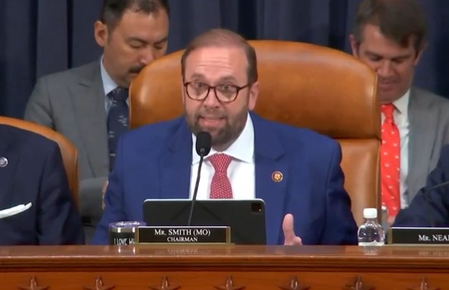
Washington, June 13 (IANS) US lawmakers this week debated a package of tax proposals aimed at easing compliance burdens for millions of cryptocurrency users, as Congress moved to establish clearer rules for a rapidly expanding digital asset sector that supporters say is critical to maintaining America’s leadership in financial innovation.
During a hearing of the House Ways and Means Committee, lawmakers and industry representatives argued that existing tax rules have failed to keep pace with the growth of cryptocurrencies, creating uncertainty for investors, businesses and regulators.
“America needs clear tax rules of the road to remain the crypto capital of the world,” Committee Chairman Jason Smith said.
The hearing examined a series of bills that would simplify reporting requirements for certain digital asset transactions, clarify the tax treatment of mining and staking rewards, extend some tax provisions available to traditional financial assets to cryptocurrencies, and tighten anti-abuse rules.
Smith said more than 67 million Americans now own cryptocurrency and argued that the current framework places unnecessary burdens on ordinary users.
“31 per cent of crypto owners would like to buy a cup of coffee at the local shop, yet each $5 cup of coffee bought with a digital asset generates two new pieces of tax paperwork,” he said.
Industry representatives told lawmakers that tax uncertainty is undermining broader adoption of blockchain-based financial services.
Lawrence Zlatkin, Vice President of Tax at Coinbase, said existing rules generate excessive compliance costs while providing limited benefits to tax authorities.
“When tax rules are clear, people comply. When they’re unclear, complexity grows, costs rise, and economic activity moves elsewhere,” Zlatkin told the committee.
He urged Congress to reduce reporting requirements for small transactions and provide greater certainty for taxpayers using digital assets for payments and investments.
Witnesses also called for clearer guidance on the taxation of cryptocurrency mining and staking, activities that help validate blockchain transactions and generate rewards for network participants.
Sarah Reilly, Vice President and Senior Tax Counsel at Fidelity Investments, said legislative action was needed to address gaps in existing tax law.
“Clear and administrable tax rules, consistent with existing tax principles, are needed to address issues that are unique to digital assets and blockchain technology,” she said.
However, some experts warned against creating tax advantages for digital assets that are not available to other investments.
Michael Kaercher, Deputy Director of the Tax Law Center at NYU Law, urged lawmakers to focus on parity and safeguards against abuse.
“The first rule of road maintenance — don’t make the roads worse,” Kaercher said.
Democratic lawmakers expressed concern that certain proposals could create loopholes or encourage investors to shift money from traditional financial products into cryptocurrencies.
Ranking Member Richard Neal said some provisions would provide useful clarity and reduce paperwork, but cautioned lawmakers against favouring one asset class over another.
“We want to be careful about putting a thumb on the scale,” Neal said.
The debate comes as Washington intensifies efforts to establish a regulatory framework for digital assets, including cryptocurrencies, stablecoins and blockchain-based financial services. The Trump administration has repeatedly voiced support for expanding the US digital asset sector and positioning the country as a global hub for crypto innovation.
–IANS
lkj/rs