
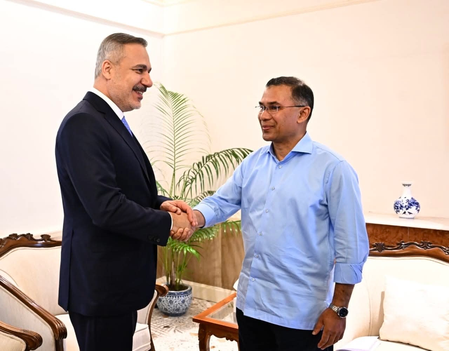
Dhaka, July 1 (IANS) As Dhaka and Ankara deepen their engagement, questions have also emerged over Turkey’s posture towards Bangladesh’s 2026 political landscape. While Turkey has outwardly maintained contacts across the political spectrum in Bangladesh, some observers argue that Ankara’s public statements and diplomatic outreach have been perceived as favoring Islamist political groups, particularly Jamaat-e-Islami, a report has stated.
“Turkey often presents itself as a champion of justice, democracy, and Muslim solidarity. Yet its historical relationship with Bangladesh tells a far more complicated story. From opposing Bangladesh’s independence in 1971 and supporting Pakistan in international bodies against Bangladeshi nationalism to repeatedly criticising the prosecution of Liberation War criminals decades later, Ankara’s policies have frequently placed it at odds with the sentiments of many Bangladeshis who view the Liberation War as the foundation of their national identity,” according to a report in Bangladesh’s newspaper Daily Sun.
According to the report, Turkey did not support Bangladesh during the country’s 1971 Liberation War against Pakistan. Instead, it endorsed Islamabad’s stance that the conflict was an internal issue and underscored Pakistan’s territorial integrity.
“Turkey did not recognise Bangladesh during the war or immediately after its victory in December 1971. Recognition came only on 22 February 1974, after Pakistan itself accepted Bangladesh’s independence and ahead of Bangladesh’s admission to the Organisation of Islamic Cooperation (OIC),” the report stated.
“This delay reflected Turkey’s strategic priorities. Pakistan was a longstanding ally through Cold War security arrangements and broader political ties within the Muslim world. For Ankara, preserving its relationship with Islamabad outweighed supporting Bangladesh’s struggle for self-determination,” it added.
The report highlighted that Jamaat opposed the country’s independence during the 1971 Liberation War and aligned itself with Pakistan. It added that the party’s leaders collaborated with the Pakistani military regime, while some members were subsequently convicted by Bangladeshi courts for war crimes.
“There is no convincing historical evidence that Turkey specifically endorsed Jamaat-e-Islami in 1971. However, because Turkey supported Pakistan’s position, it objectively found itself aligned with the same side of the conflict as Jamaat”
Turkey’s relationship with Bangladesh, the report said, underscores how historical memory continues to influence contemporary diplomacy. For Bangladesh, the 1971 Liberation War is not merely a chapter of geopolitical change but the foundation of its national identity. Against this backdrop, Turkey’s support for Pakistan during the war, coupled with its subsequent defence of convicted Jamaat leaders, have remained contentious issues.
While Bangladesh and Turkey have expanded cooperation across several sectors, the report said, “The challenge for both countries is whether they can deepen practical cooperation while acknowledging the historical realities that continue to influence public opinion. Genuine friendship between nations is strengthened not by ignoring history, but by confronting it honestly and respectfully.”
–IANS
scor/as