
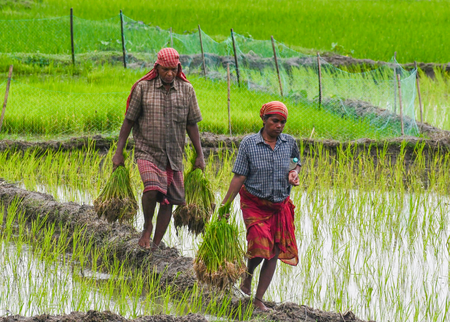
Thanjavur, July 25 (IANS) Kuruvai paddy cultivation in parts of the Cauvery delta has come under severe stress as farmers grapple with a combination of rapidly declining groundwater levels, rising salinity and the continued non-release of water from the Mettur dam.
The situation has been further aggravated by an intense heatwave, which has accelerated evaporation, and a reduction in the duration of free electricity supply for agricultural pumps.
Farmers in Papanasam, Tiruvaiyaru and adjoining areas of Thanjavur district say they are struggling to protect their standing kuruvai crop after relying almost entirely on groundwater for irrigation this season.
Their concerns intensified after Tangedco informed them on Wednesday that the daily free power supply for agricultural pump sets would be reduced from 18 hours to 14 hours, limiting their ability to draw groundwater for irrigation.
According to Agriculture Department officials, kuruvai cultivation has been taken up on nearly one lakh acres across Thanjavur district using groundwater.
Under normal conditions, farmers begin cultivation with groundwater and later depend on Cauvery water released from the Mettur dam to sustain the crop.
This year, however, the annual release of water, usually made on June 12, did not take place because of inadequate storage in the reservoir, forcing farmers to depend exclusively on groundwater.
Farmers say the prolonged absence of river flow has significantly lowered the water table.
“The scorching heat is causing rapid evaporation from the fields, while there has been no water flow in the Cauvery for more than six months. Groundwater levels are falling every day,” said R. Arulsamy, a farmer from Ganapathy Agraharam in Papanasam.
The crisis is particularly acute in Papanasam block, where kuruvai has been cultivated on about 8,400 acres. Harvesting has been completed on around 2,000 acres, but farmers cultivating the remaining fields fear mounting irrigation challenges.
Another concern is the sharp increase in groundwater salinity in villages including Vellam Perambur, Then Perambur, Allur Azhisikudi and Panaveli.
Farmers said that in previous years, the timely release of water from Mettur recharged groundwater reserves through canals and helped reduce salinity.
With no such recharge this season, saline groundwater is affecting irrigation and threatening crop health.
Many farmers have appealed to the Tamil Nadu government to release at least a limited quantity of water from the Mettur dam before the Adi Perukku festival on August 3 to provide temporary relief.
However, agriculture experts believe such a move is unlikely given the present storage position.
P. Kalaivanan of the Senior Agro Technologist Forum said the Mettur reservoir currently holds only about 35 tmc ft of water against its full capacity of 93.47 tmc ft.
While there had been hopes of opening the dam in August, he said the prevailing storage levels suggest that water may not be released until September.
He added that farmers could still salvage the coming season by opting for direct sowing of medium-duration samba paddy in September, provided the northeast monsoon brings adequate rainfall.
—IANS
aal/rad