
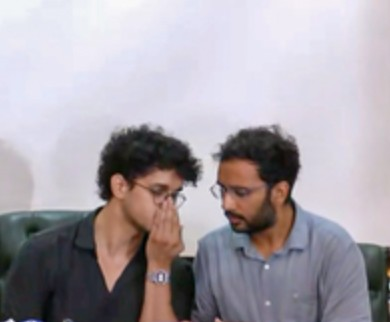
New Delhi, Oct 21 (IANS) The Delhi High Court on Wednesday questioned whether Cockroach Janata Party (CJP) leaders Saurav Das and Ashutosh Ranka could technically be described as Gen Z, after being informed that they were 27 and 32 years old, respectively, while hearing their plea challenging the extension of their judicial custody in the Jantar Mantar trespassing case.
A single-judge Bench of Justice Subramonium Prasad made the oral observations while hearing submissions by advocate Abhik Chimni, appearing for the two activists, who sought their release on personal bonds after the Special Executive Magistrate (SEM) rejected their sureties and extended their custody.
When Chimni informed the High Court about the ages of the two petitioners, Justice Prasad remarked, “Then you are not Gen Z. What is Gen Z?” After being told that people born after 1997 are generally considered Gen Z, the High Court reiterated that the petitioners did not fall within that category.
The Delhi High Court also questioned how the nature of protests and the causes associated with them had evolved, observing that although students and young people had participated in earlier protests, the cause being pursued had since changed.
“Earlier, it was a student protest; children were there, but now it’s another cause. These people remain the same, but the cause is changed,” Justice Prasad orally remarked.
The judge then questioned the association of those organising such demonstrations and the purpose behind it, observing that these aspects could assume significance when authorities examined the possibility of a breach of peace and public tranquillity.
“When there is apprehension of breach of peace and tranquillity, all these questions will assume importance. What is your association? What is the purpose of the association?” the High Court remarked.
It added that such questions assumed significance when authorities were required to assess the likelihood of a breach of the peace and disturbance of public tranquillity.
Justice Prasad observed that these issues could be examined in appropriate proceedings, but the immediate question before it concerned the insistence on furnishing bonds.
During the hearing, Chimni challenged the rejection of the sureties furnished by the petitioners and argued that the decision was legally unsustainable. He sought their release on the basis of personal bonds, contending that preventive custody could not be imposed arbitrarily.
However, the High Court questioned whether the rejection of sureties could be termed illegal and whether the SEM court’s order was amenable to a statutory revision. It also questioned the petitioners’ decision to invoke the High Court’s writ jurisdiction under Article 226 of the Constitution when an alternative remedy of filing a revision petition was available.
Observing that there was a distinction between the maintainability of a petition and whether it ought to be entertained at that stage, Justice Prasad indicated that the petitioners should first await the outcome of the proceedings before the SEM court.
The judge also referred to the breach of bonds furnished by the activists earlier and their subsequent presence at Jantar Mantar, which had been denotified as a designated venue for demonstrations.
The Delhi High Court said that the challenge to the denotification was pending before the Supreme Court and that the notification had not been stayed.
Questioning the need to pursue High Court proceedings before the SEM court took up the matter later in the day, Justice Prasad suggested that the petitioners withdraw the plea and consider their legal options after the proceedings at 2 p.m. “Would it not be better for you to withdraw this, see what happens at 2 PM and then follow the course of law. It is for you to make a decision,” the judge said.
After the matter was passed over to enable the counsel to take instructions, Chimni informed the High Court that the petitioners wished to withdraw the plea. The Delhi High Court permitted the withdrawal and disposed of the petition without expressing any opinion on the merits of the case, leaving all contentions open.
The development came on the day the judicial custody of the two activists was due to end, with both scheduled to be produced before the SEM court. On Monday, SEM Ritu Raj had extended their custody, observing that their conduct “shows no respect for law” and reflected their “habitualness in calling protest at de-notified areas”.
The SEM court had recorded that the investigating officer placed material on record indicating a likelihood of a breach of peace and disturbance of public tranquillity. It also recorded that the two activists had allegedly breached bonds furnished before the SEM, South-West District, on October 11, and subsequently committed a breach of peace in the present case.
Das and Ranka, along with CJP member Ajinkya Shinde, were among 14 people detained on October 13 after they allegedly entered Jantar Mantar through private premises and obstructed police personnel from discharging their official duties.
The CJP members were protesting against alleged irregularities in the Special Intensive Revision (SIR) of electoral rolls and had raised slogans against Chief Election Commissioner (CEC) Gyanesh Kumar.
–IANS
pds/dpb