
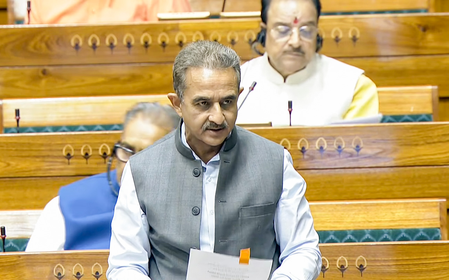
New Delhi, March 30 (IANS) Integrating the principles of circular economy and extended producer responsibility, the Solid Waste Management Rules, 2026 shall come into effect from April 1 with a specific focus on efficient waste segregation and management, the Lok Sabha was informed on Monday.
Union Minister of State for Environment, Forest and Climate Change, Kirti Vardhan Singh, said the Solid Waste Management Rules, 2026, mandate four-stream segregation of solid waste at source into wet waste, dry waste, sanitary waste and special care waste.
The new rules prescribe clear definition of bulk waste generators who have a mandate to fulfil Extended Bulk Waste Generator Responsibility, in order to ensure that the waste generated is collected, transported and processed in an environmentally sound manner, he said.
The rules also operationalise the online tracking and monitoring of all stages of solid waste management through Centralised Online Portal including collection, transportation, processing and disposal, said Kirti Vardhan Singh.
The rules prescribe specific roles and responsibilities for urban and rural local bodies, State/UT Governments and Central ministries.
The rules prescribe an increase in the fuel substitution rate from current 5 per cent to 15 per cent over a six-year period for industrial units, including cement plants and waste-to-energy plants for use of Refuse Derived Fuel (RDF), said the Minister of State.
In order to facilitate faster allocation of land for solid waste processing and disposal facilities, graded criteria for development has been prescribed in the rules, he said.
Kirti Vardhan Singh said the solid waste processing and disposal facilities have been mandated for online submission of reports.
Waste processing facilities have also been subjected to audit under the rules, he said.
The rules also mandate development and implementation of a time bound action plan for remediation of legacy waste and further strengthening of restrictions on landfilling of solid waste, he said.
Special provisions for solid waste management in hilly areas and islands have also been included apart from the provision for levy of environmental compensation based on the ‘polluter pays’ principle, he said.
–IANS
rch/rad