
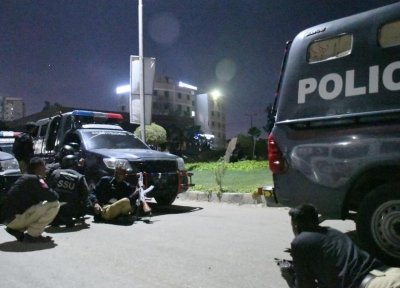
Islamabad, June 2 (IANS) Security situation in Pakistan deteriorated in May, particularly due to increase in terrorist attacks in Khyber Pakhtunkhwa and Balochistan, according to the monthly security assessment released by the Pakistan Institute for Conflict and Security Studies (PICSS), local media reported on Tuesday.
The latest findings by PICSS showcased increase in terror attacks during May after a brief period of relative decline, especially in Khyber Pakhtunkhwa and Balochistan. The sharp rise in attacks, casualties, suicide bombings and kidnappings suggest that security challenges remain severe.
As many as 128 terrorist attacks occurred in May in comparison to 101 attacks in April, showcasing a 27 per cent rise. As many as 71 people, 68 security personnel and six members of peace committees were killed while 147 people, 35 security personnel and three peace committee members were injured in terrorist violence in May.
Compared to April, civilian casualties rose from 37 to 71, showcasing a 92 per cent increase while security personnel fatalities rose from 28 to 68, showcasing a 143 rise. Pakistan witnessed six suicide attacks in May, causing death of 34 security personnel and nine civilians.
Balochistan was the most affected province of Pakistan in May as it recorded 71 terrorist attacks, in comparison to 34 in April, showcasing a 109 per cent rise. As many as 54 kidnappings occurred in Pakistan in May. Of them, 52 kidnappings took place in Balochistan alone.
On May 16, the Human Rights Commission of Pakistan (HRCP) expressed concern over the sharp deterioration in security in Balochistan and Khyber Pakhtunkhwa, where residents were increasingly caught between enforced disappearances, targetted killings and militant attacks.
It stated that the alleged kidnapping of the vice-chancellor, pro-vice chancellor and two other Gwadar University employees in Mastung, while travelling from Gwadar to Quetta, sparks questions about the state’s ability to secure major highways and protect residents.
In a statement posted on X, HRCP stated, “HRCP is deeply alarmed by the sharp deterioration in security across Balochistan and Khyber Pakhtunkhwa, where citizens are increasingly caught between enforced disappearances, targeted killings, and militant attacks.”
“In Balochistan, the alleged abduction of the vice-chancellor, pro-vice chancellor, and two other Gwadar University employees in Mastung, while travelling from Gwadar to Quetta, raises serious questions about the state’s ability to secure major highways and protect civilians. HRCP is equally disturbed by the killing of Professor Ghamkhwar Hayat in Noshki earlier today and reminds the government that when teachers and academics are abducted or shot dead, the consequences extend far beyond individual tragedies,” it added.
According to the statement shared by HRCP on X, the deadly attacks in Khyber Pakhtunkhwa’s Bannu, Bajaur, and Lakki Marwat highlight worsening pattern of militant violence that continues to take lives indiscriminately.
“In Khyber Pakhtunkhwa, deadly attacks in Bannu, Bajaur, and Lakki Marwat, including the bombing of a crowded market in Sarai Naurang, point to a worsening pattern of militant violence that continues to take lives indiscriminately, including those of civilians, police officers and security personnel,” HRCP posted on X.
“We urge the state to move beyond statements of condemnation and demonstrate that human life and public spaces can still be protected. The recovery of the missing university officials, credible investigations into all such attacks, and accountability for perpetrators are immediate and necessary first steps,” it added.
–IANS
akl/as