
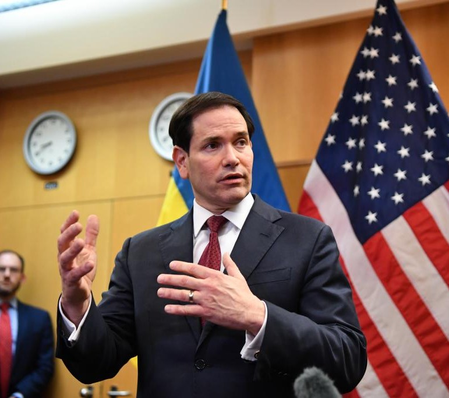
Washington, June 2 (IANS) US Secretary of State Marco Rubio is expected to tell lawmakers on Tuesday that the Trump administration has fundamentally reshaped US foreign assistance policy, replacing what it sees as dependency-driven aid programmes with a strategy centred on trade, investment and partnerships that directly advance American interests.
In prepared testimony obtained by IANS ahead of a hearing before the House Appropriations Subcommittee on National Security, Department of State, and Related Programs, Rubio argues that foreign assistance should serve as an instrument of statecraft rather than an open-ended commitment disconnected from US national priorities.
The remarks offer the clearest outline yet of how the administration intends to justify its foreign affairs budget request while defending sweeping changes made to US foreign aid programmes since President Donald Trump returned to office in January 2025.
“We transformed the way we do foreign aid,” Rubio says in the prepared testimony. “Programs that failed to advance” American interests were eliminated, while remaining assistance has been brought under the strategic direction of the State Department.
Rubio plans to tell lawmakers that foreign aid remains an important tool but only when it produces clear benefits for the United States.
“Foreign aid, properly understood, is a valuable tool — a key instrument of statecraft,” he says. “But every dollar of our assistance must make America safer, stronger, or more prosperous.”
The Secretary argues that the administration’s reforms are designed to ensure taxpayer-funded assistance advances specific national objectives rather than broader development goals.
“It must serve the American interest or it should not be paid for by the American people,” Rubio says.
At the centre of the administration’s approach is a shift away from traditional aid models.
“That is why our new model emphasises trade over aid, investment over dependency, and mutually beneficial partnership over permanent patronage,” Rubio says in the prepared remarks.
Rubio is expected to present the administration’s budget proposal as a continuation of that strategy.
According to the testimony, the budget includes funding for a new “America First Global Health Strategy”, which Rubio says is already being developed through dozens of bilateral assistance agreements aligned with core American interests.
The proposal also seeks to strengthen US economic competitiveness through the “America First Opportunity Fund”.
Rubio says the programme would support “key strategic investments”, secure access to critical minerals, rebuild American supply chains and enhance competitiveness in industries considered vital to future economic growth.
The testimony reflects a broader effort by the administration to link foreign policy more closely with economic and industrial objectives.
“It reinforces and bolsters American economic dominance,” Rubio says of the proposed budget.
Rubio also argues that foreign policy can no longer be viewed separately from domestic economic strength.
“A country that cannot build ships, produce medicine, control immigration, or access vital resources cannot defend its people, its interests, or its way of life,” he says.
The administration’s emphasis on supply chains, strategic investment and critical minerals comes as governments around the world increasingly compete for access to technologies and resources considered essential to economic security and advanced manufacturing.
–IANS
lkj/rs