
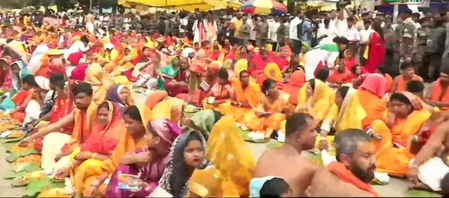
Ranchi, July 16 (IANS) The 335th historic Rath Yatra of Lord Jagannath was taken out in Ranchi on Thursday amid an atmosphere of deep faith, tradition, and communal harmony.
The grand procession, which began from the historic Jagannathpur Temple, drew lakhs of devotees from across the region.
Amid chants of “Jai Jagannath”, the blowing of conch shells, and devotional songs, the idols of Lord Jagannath, his elder brother Balabhadra, and sister Subhadra were ceremoniously placed on the ornate chariot and taken towards Mausibari (the maternal aunt’s abode).
Following traditional rituals and special prayers, the deities were installed on the chariot before the procession commenced.
As the Rath Yatra began, enthusiasm among devotees reached its peak. Thousands joined hands to pull the chariot with ropes along the nearly half-km route to Mausibari.
Lord Jagannath will remain there for nine days, granting devotees darshan, before returning to the main temple during the traditional Ghurti Rath Yatra.
Jharkhand Chief Minister Hemant Soren also participated in the celebrations. Extending his wishes on the occasion, he prayed that the blessings of Lord Jagannath, Lord Balabhadra, and Goddess Subhadra bring happiness, peace, prosperity, and good health to all.
He said the Rath Yatra inspires people to walk the path of service, social harmony, faith, and humanity.
The Ranchi Rath Yatra is regarded as one of the oldest such processions in the country. Its origins date back to 1691, when Nagvanshi ruler Aninath Shahdeo drew inspiration from the famed Jagannath Temple in Puri and constructed the Jagannathpur Temple atop a hill in Ranchi.
He subsequently initiated the Rath Yatra tradition, which has continued uninterrupted for over three centuries. Today, the festival forms an integral part of Jharkhand’s cultural and religious identity.
The architecture and rituals of the Jagannathpur Temple closely resemble those of the Jagannath Temple in Puri. The wooden idols of Lord Jagannath, Balabhadra, and Subhadra are worshipped according to age-old traditions. For devotees, pulling the sacred chariot is considered an act of immense spiritual merit.
One of the defining features of the Ranchi Rath Yatra is its enduring message of social cohesion. For generations, people from different castes and communities have played traditional roles in organising and managing the festival. This shared participation has transformed the event into more than just a religious celebration, making it a symbol of cultural heritage, inclusivity, and communal goodwill.
The nine-day fair that accompanies the Rath Yatra is also expected to attract large numbers of visitors from across Jharkhand and neighbouring states, further enhancing the festive spirit surrounding one of the region’s most cherished religious events.
–IANS
snc/skp/