
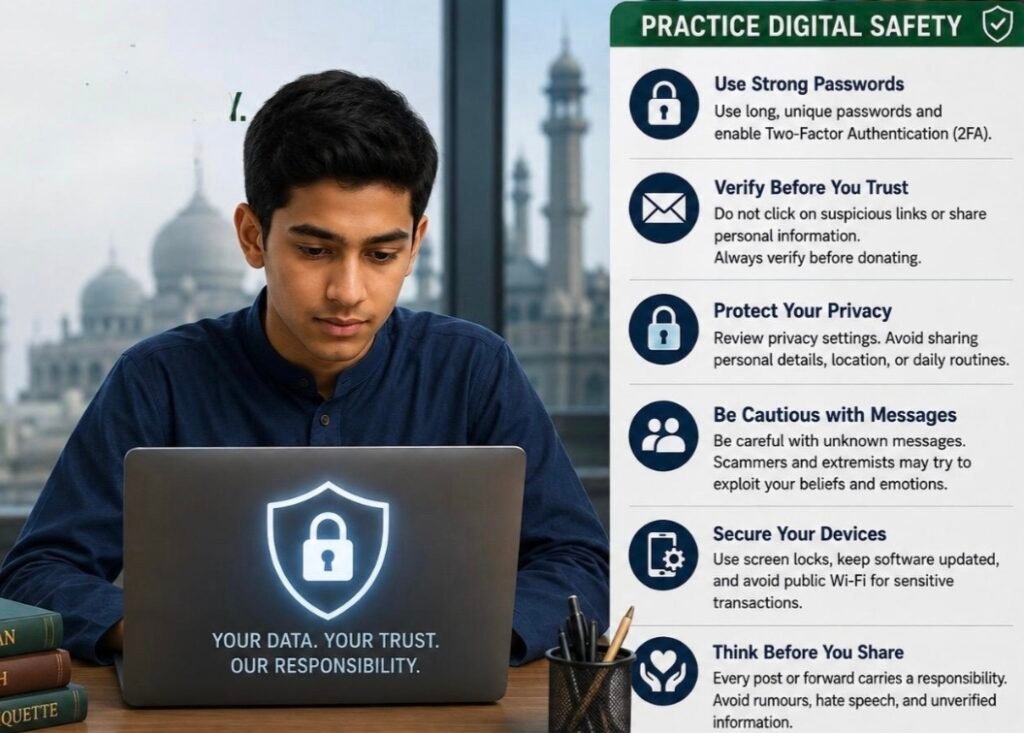
The internet has transformed education, communication, charity and community service, but it has also brought growing risks of cyber fraud and online exploitation. Young people need to navigate the digital world with caution and responsibility.
Phishing links, fake donation appeals, fraud carried out in the names of religious scholars and organisations, attempts to lure youngsters into harmful activities, extremist content and misuse of personal information are among the key threats. Religious faith and identity can also be exploited by fraudsters.
In Islam, the concept of ‘Amanah’ emphasises responsibility and trust. In the digital age, protecting passwords, personal and financial information, photographs and other people’s private data is part of that responsibility.
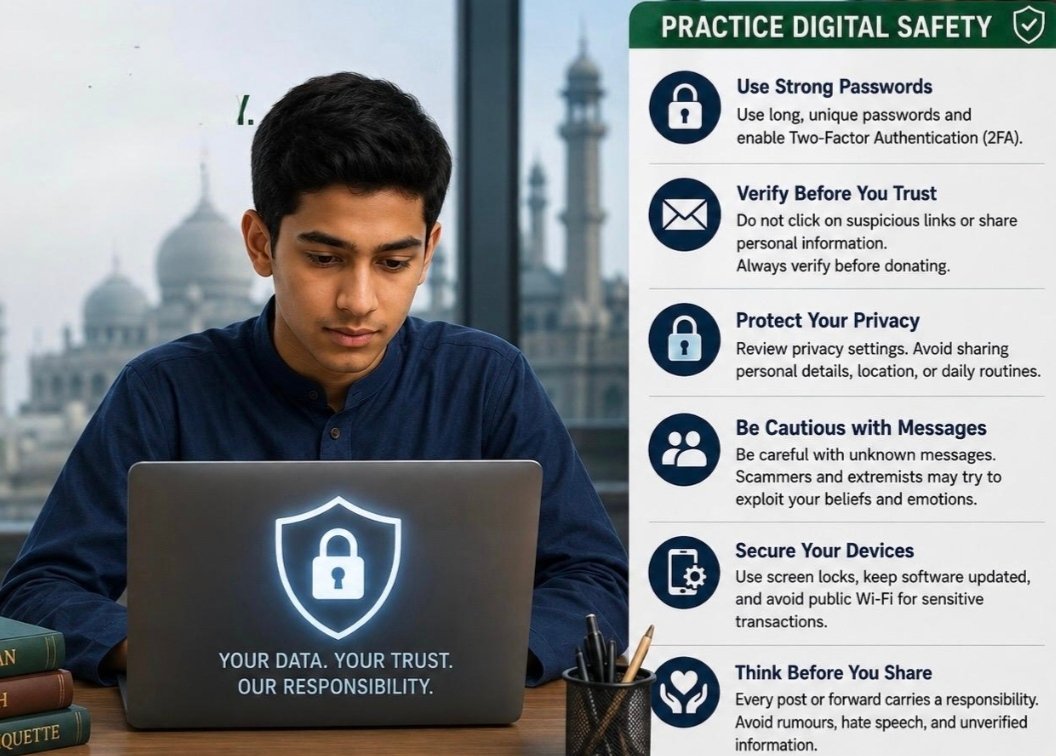

Using strong, unique passwords, enabling two-factor authentication (2FA) and regularly updating phones and other devices can improve online security. Donation appeals and suspicious messages should be independently verified. Users should also think carefully before clicking links, posting content or forwarding messages.
Parents, mosques and community organisations have an important role in guiding youngsters to identify online scams, misinformation, provocative material and harmful digital content.
Digital awareness is not about fear; it is about responsible behaviour: Protect your information. Verify before you trust. Think before you share.
In the digital age, individual online safety is closely linked to the safety of families and communities.
- Article by Afif Ahsan