
New Delhi, Sep 5 (IANS) India wants BRICS to remain a meaningful platform for the Global South without letting it drift into China’s orbit or become an explicitly anti-Western alliance, a report has stated.
It noted that disengaging with Beijing is not an option. The balancing act demands ‘diplomatic dexterity’ — engaging China where necessary, coordinating with Russia where interests overlap, and preserving India’s strategic autonomy
“On August 28, at the end of the 25th round of special representative level talks between India’s National Security Adviser Ajit Doval and Chinese Foreign Minister Wang Yi in Beijing, both sides separately issued an eight-point list of outcomes and consensus that promises to advance the future dialogue on the vexed boundary issue. Regardless of ultimate resolution, the outcome laid the groundwork for Chinese President Xi Jinping’s anticipated visit to New Delhi to attend the 18th BRICS summit on September 12 and 13,” a report in ‘The Diplomat’ highlighted.
“India is currently the BRICS chair. Although still unconfirmed, this would be Xi’s first visit to India in seven years. He and Indian Prime Minister Narendra Modi are expected to hold a bilateral meeting on the sidelines of the summit to add momentum to their continued effort to rebuild the frayed China-India ties,” the report added.
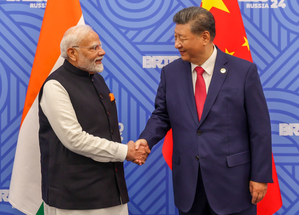
Both Prime Minister Modi and Jinping attended the Shanghai Cooperation Organisation (SCO) summit in Bishkek from August 31 to September 1. However, the two held no bilateral exchanges, apart from a brief handshake that lasted only a few seconds.
New Delhi prefers any high-profile meeting between the two leaders to take place on Indian soil, rather than at a foreign venue or merely for optics, The Diplomat mentioned.
The report noted that internal cohesion is central to the formation, functioning, and expansion of minilateral organisations, with a shared vision serving as the foundation that binds their members together.
“While differences and their explicit articulation are common in the larger universal forums and multilateral organizations such as the United Nations, minilateral groups are built to espouse specific goals, and their success depends on the extent to which differences are kept manageable or outside the agenda of the organisation,” it detailed.
According to the report, New Delhi has set out a broad set of objectives for its chairmanship, seeking to make BRICS more “practical, actionable, development-oriented” and responsive to the challenges facing the Global South.
It has also sought to give the BRICS acronym a new policy meaning — ‘Building for Resilience, Innovation, Cooperation and Sustainability’ — while advocating a ‘humanity first’ and ‘people-centric’ approach.
“However, the key to achieving even its rather less-contentious agenda – including issues such as disaster resilience, clean energy, climate action, green finance, energy transition, health, fintech, digital public infrastructure, AI, trade, supply chains resilience, and space economy – needs support from other members, including China and Russia. New Delhi’s parallel diplomacy in Beijing and Bishkek appears to be geared toward those ends,” the report noted.
–IANS
scor/as