
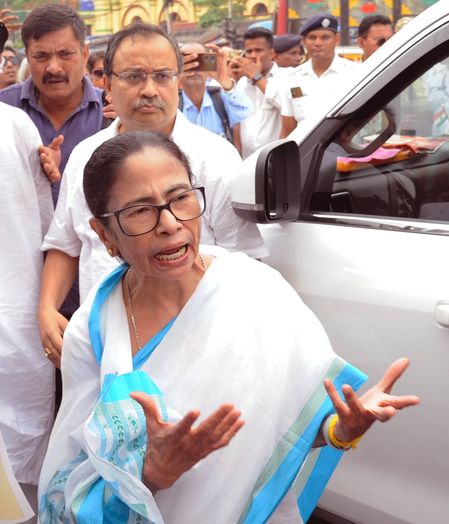
New Delhi, July 17 (IANS) Trinamool Congress factions are racing to own “July 21 Martyrs’ Day” for a symbolic claim on political legitimacy and a live test of organisational strength, while Congress party’s invitation to Mamata Banerjee to join its event — on condition that she admits that leaving the party was a “mistake” — is a tactical bid to reclaim the day’s history while exposing the former Chief Minister’s weakened position.
The date commemorates the 1993 Youth Congress march, led by Mamata Banerjee, that turned deadly when Kolkata Police fired on the protestors, killing 13 people while several were injured in the resultant stampede.
The march was organised against the then Left Front government, with protesters demanding photo voter ID cards.
The incident became central to Mamata’s political identity, owning the event that signals moral and organisational authority.
Four separate events are scheduled this year, indicating a contest for show of strength.
With the Trinamool split and many of its MLAs and MPs defecting, rival factions and the Congress see July 21 as a chance to demonstrate which grouping can mobilise people and claim the ‘anti-establishment’ mantle.
As the supremo of the then undivided Trinamool Congress, Mamata Banerjee preferred to hold her annual rally in the heart of Kolkata. But court directions and police constraints have forced a venue rethink.
The Calcutta High Court refused permission for the traditional Victoria House site citing traffic and law‑and‑order concerns and directed the Mamata‑led faction to hold the event elsewhere.
Her party faction has resisted relocation to avoid conceding symbolic ground; but legal limits on participants and police conditions make her putting up mass show difficult.
Meanwhile, Congress leaders insist the 1993 march was organised under the banner of its youth wing and want to reclaim the narrative; inviting Mamata Banerjee to its Shahid Minar event while asking her to admit leaving Congress was a “mistake” is both an olive branch and a political trap.
With the Trinamool fractured, Congress hopes a public atonement would delegitimise Mamata’s break and attract disillusioned voters; the demand is symbolic leverage more than sincere reconciliation.
Incidentally, not long ago, there was an anticipation floating around in political corridors on the return to Congress of prominent leaders who had severed their connections earlier.
This included the name of Mamata Banerjee.
The speculations were later shot down.
In recent video messages on Facebook, Mamata Banerjee has rather announced a fightback, and possible bounceback.
In 1997-1998, Mamata Banerjee converted grassroots anger into a new party because she was the clear focal point of dissent inside Congress who established herself as the principal face against the Left Front.
Today, the septuagenarian leader faces organisational erosion, defections of close confidantes, legal and administrative constraints, a changed public mood and different electoral landscape.
Her political assets lay in fearless leadership, disruptions and unpredictability, personal charisma, a loyal core of grassroots workers, and the symbolic ownership of July 21.
Her comeback would require rebuilding organisational depth, a clear political narrative beyond nostalgia, and credible local leaders, that appear a taller order now.
Whether she can turn July 21 into a disciplined, emotive spectacle, and avoid further defections is yet to be seen.
It is evident that all blocs are under intense scrutiny and the events will face comparison.
The clear and present considerations include turnout numbers considering police enforcement of court limits, and further defections.
July 21 will thus be a referendum on symbolic ownership as much as organisational muscle.
Mamata Banerjee can still salvage political relevance if she converts symbolism into disciplined mobilisation and new local leadership. But repeating the sweeping triumph of her heydays is unlikely without structural renewal and a coherent post‑defeat strategy.
–IANS
jb/khz