
Washington, June 11 (IANS) A growing protest movement in Pakistan-occupied Jammu and Kashmir (PoJK) is unlikely to retreat until its demands for greater autonomy, local control over resources and political reforms are met, a prominent activist told IANS, alleging a widening crackdown by Pakistani authorities and accusing Islamabad of failing to address longstanding grievances.
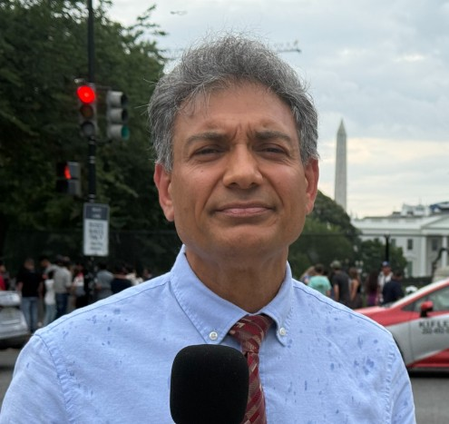
“There are thousands and thousands of protestors. They’re coming from all over the occupied area,” Senge Sering, founder of the Washington-based Institute for Gilgit Baltistan Studies, said in an exclusive interview.
According to Sering, demonstrations intensified after the Joint Awami Action Committee, a coalition of traders, students and activists, was declared a banned organisation on June 5.
“Since that has happened, people have come out on the street,” he said, alleging that Pakistani law enforcement responded with force. “The Pakistani law enforcement went and tackled them and shot and killed dozens and dozens of people in PoJK.”
Sering claimed that authorities had deployed large numbers of security personnel from Pakistan into the region and accused them of carrying out widespread abuses.
“We see that Pakistani law enforcement, through the Punjab police, through the paramilitary, including 15 to 20,000 personnel that they have brought from Pakistan, they have attacked all kinds of people in PoJK,” he said.
He further alleged that security forces entered homes, looted property and prevented medical personnel from treating injured protesters.
“They went to the hospitals. They’re threatening the doctors and hospital staff and telling them not to treat the injured patient,” Sering said.
The activist acknowledged that independent verification of casualty figures remains difficult due to the restrictions in the region.
“Right now, there’s a complete shutdown. No phone or internet service is working, and there’s no media allowed,” he said.
Sering said the current agitation differs from previous rounds of protests because many residents no longer trust promises made by Pakistani authorities during earlier negotiations.
“Pakistan has exposed itself as the liars, and now they’re not going to listen to or believe anything the Pakistanis are telling the people of PoJK,” he said.
He described the latest mobilisation as unprecedented.
“This time, the intensity of the protest is huge,” Sering said. “It’s shocking when you look at different videos that come from different regions, how well-organised people are.”
According to Sering, protesters are demanding greater local autonomy, control over land and natural resources, relief from economic hardships and changes to the region’s political structure.
“They want control of land and resources in their own hands, and they want less influence and less interference from Pakistan,” he said.
Sering also pointed to growing opposition to what he described as externally imposed political representatives.
“The local people do not want that because these are the 12 people that the Pakistanis’ ISI uses to create and discard the governments,” he said.
He added that demonstrators were determined to continue their campaign.
“This time, you know, they will not leave till their demands have been met,” he said.
Asked what message he would send to the Trump administration, Sering criticised recent US engagement with Pakistan’s military leadership.
“President Trump has made a huge mistake by aligning himself with General Asim Munir,” he said.
Sering argued that international backing for Pakistan’s military establishment had consequences for residents of PoJK and other regions.
“Every time he supports the Pakistani military, the Pakistani military gets this excess of international bonhomie, which they use to suppress and oppress the local people,” he said.
He urged Washington to reassess its approach.
“Pakistan is not a sincere friend and ally,” Sering said, adding that the US should “stand with the people of PoJK.”
Sering was born in Pakistan-occupied Gilgit-Baltistan and has long advocated for human rights and cultural preservation in the region. Through the Institute for Gilgit Baltistan Studies, established in 2010, he has worked with policymakers, researchers and international institutions to highlight issues related to local autonomy, democracy, environmental sustainability and indigenous rights.
–IANS
lkj/sd/