
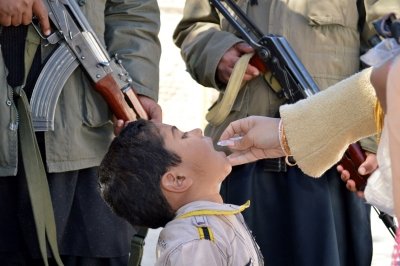
Islamabad/New Delhi, Feb 3 (IANS) Even after three decades of aggressive eradication campaigns, Pakistan’s polio woes continue amid public mistrust and logistical gaps, according to a media report.
Pakistan first launched the anti-polio campaign in 1994. Yet, over the last 31 years, the country recorded a staggering total of 14,206 confirmed polio cases, The Express Tribune’s T-Magazine reported.
It stated that the country has also created an invisible population of survivors due to a lack of a government-run system for the treatment, rehabilitation, or long-term social integration of children already disabled by polio.
“Till date, the country lacks public rehabilitation centres, vocational training programmes, or psychosocial support systems tailored to polio survivors, forcing families to seek costly private care that many cannot afford. Without structured support, disabled children and adults are left vulnerable to neglect and exploitation, while facing persistent barriers to education, employment, and social participation,” the report said.
Data from the National Emergency Operations Centre (NEOC) showed that Pakistan reported the highest number of polio cases — 2,635 — in 1994, following which there was a steady decline.
However, the cases surged again in 2025. A total of 30 cases were reported from across the country, with the highest number (19) recorded in Khyber-Pakhtunkhwa (K-P), nine recorded in Sindh, and one each in Punjab and Gilgit-Baltistan (G-B). In K-P, the worst-affected province, the majority of cases originated from North Waziristan, Lakki Marwat, Tank, Dera Ismail Khan, Lower Kohistan, Torghar, and Bannu.
“Despite decades of mass vaccination campaigns, polio continues to circulate in Pakistan, largely due to deep-rooted mistrust and persistent resistance to immunisation. In essence, the country’s eradication efforts are undermined by a combination of misinformation, political interference, and security challenges that have turned protective polio drops into vials of controversy,” the report said.
The report stated that erosion of trust was one of the primary reasons for polio to remain still endemic in Pakistan. Security threats have further compounded the problem in the country.
Other reasons include weaknesses in communication and outreach strategies, along with a lack of environmental surveillance, due to whichthe virus persists in sewage samples across multiple provinces.
–IANS
rvt/