
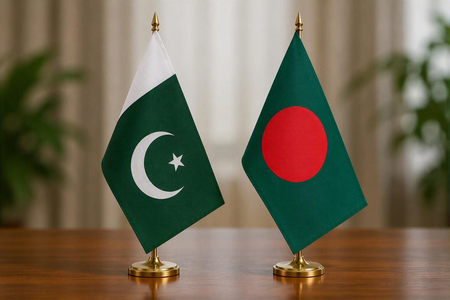
New Delhi, Aug 2 (IANS) Pakistan and Bangladesh are among the Asian economies most exposed to the fallout from the prolonged US-Iran conflict, as surging global oil prices threaten to push up inflation, strain public finances and intensify pressure on already fragile economies, according to economists and research firms.
Both countries depend heavily on imported fuel, making them particularly vulnerable to sustained increases in crude oil and diesel prices, according to a report by South China Morning Post.
Analysts warn that limited fuel inventories and weak economic buffers could allow higher global energy costs to feed quickly into domestic prices, raising the cost of transport, electricity and food for millions of households, the report said.
Jamus Lim, Associate Professor of Economics at ESSEC Business School Asia-Pacific cited by the report, said Pakistan and Bangladesh are likely to face significant inflationary pressures in the near term.
He noted that limited inventory buffers mean the impact of higher oil prices would be transmitted relatively quickly through their economies.
Oil markets have already reflected growing concerns over the conflict. Brent crude has climbed sharply over the past month, while US benchmark West Texas Intermediate (WTI) has recorded similar gains.
Diesel and other refined fuel products have also posted double-digit increases, adding to concerns over rising energy costs worldwide.
The risks have extended beyond the Gulf region after a drone strike targeted gas vessels at Egypt’s Mediterranean port of Damietta, heightening concerns over shipping routes linked to the Suez Canal, one of the key pathways for Saudi oil exports.
For Pakistan and Bangladesh, another energy-price shock could place renewed pressure on currencies, fiscal balances and government subsidy programmes.
Both countries are implementing International Monetary Fund (IMF)-supported economic reform programmes that emphasise fiscal discipline, limiting their ability to cushion consumers from higher fuel prices through subsidies.
The conflict, now in its fifth month, has added to uncertainty after US President Donald Trump weighed further military action following Iranian attacks on American military assets in Jordan, Kuwait and Bahrain.
Oxford Economics has warned that several emerging markets, including Pakistan, Egypt, Mozambique, Nigeria and Kenya, face a combination of geopolitical risks, political uncertainty and rising debt-servicing costs.
According to the research firm, countries such as Pakistan, Mozambique, Kenya, Ghana and Tunisia, which have relatively thin foreign exchange reserve buffers, could experience the sharpest deterioration if the conflict intensifies.
–IANS
pk