
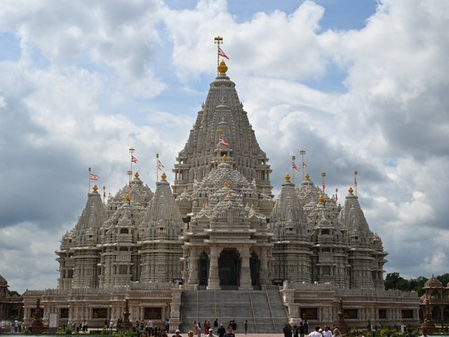
New Delhi, Sep 23 (IANS) The Domestic Tourism Expenditure Survey (DTES), conducted by the National Statistics Office (NSO), on Wednesday revealed that around 48 trips out of 100 overnight trips are being performed for ‘pilgrimage and religious’ purpose, followed by 30 trips for ‘health and medical’ purpose for overnight trips completed during the last 365 days.
The domestic tourism survey was conducted from July 2025 to June 2026.
Number of overnight trips, generated per 100 households reporting at least one overnight trip (tourist household) during last 365 days, was 127 per 100 rural tourist households (118 per 100 rural tourist households in 2014-15) and 132 per 100 urban tourist households (121 per 100 urban tourist households in 2014-15).
In rural areas, 65.1 per cent (57.1 per cent in 2014-15) households and 46.2 per cent (40.6 per cent in 2014-15) households in urban areas undertook at least one same-day trip during the last 30 days.
“On average, out of 100 overnight trips completed during the last 30 days, 89 trips were performed for ‘social’ purpose. ‘Business trips’ recorded the maximum average expenditure per trip, of Rs. 5,949, by households for overnight trips made during the last 30 days,” the findings showed.
‘Social’ (33 per cent) and ‘Shopping’ (26 per cent) were the two most frequently undertaken same-day trips by households, with shopping accounting for the highest expenditure share in both rural and urban areas.
Combining visitors both from within the state and from other states, Uttar Pradesh registered highest share of visitor-trips (15.5 per cent) as state of main destination for such trips followed by Bihar (10.5 per cent) and Tamil Nadu (9.6 per cent).
Average trip size was recorded as 2.03 overnight visitors per trip. Around 80 per cent of visitors preferred to stay for 5 days or less during their respective overnight trips.
May and October were the peak months for domestic overnight trips undertaken for holidaying, leisure and recreation purpose during the last 365 days, the survey showed.
For rural households, bus was the dominant mode of travel with 32 per cent share in the visitor-trips while train (35 per cent) was the most availed mode for travelling by urban households for such trips.
–IANS
na/