
Morbi (Gujarat), May 19 (IANS) More than 670 ceramic manufacturing units in Gujarat’s Morbi cluster have resumed operations within six weeks after disruptions linked to the conflict in West Asia had forced large sections of the industry to suspend production, a state government said on Tuesday.
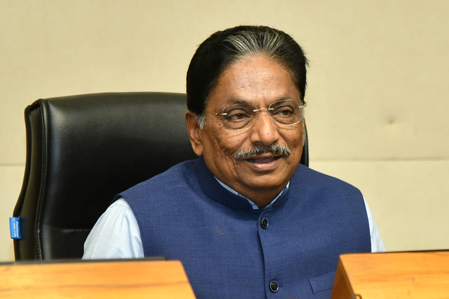
State Energy Minister Rushikesh Patel said Gujarat Energy Limited (GEL), formerly known as Gujarat Gas Limited, ensured uninterrupted piped natural gas (PNG) supply and price stability despite adverse global conditions, helping revive industrial activity in one of India’s largest ceramic manufacturing hubs.
“Even amid the prevailing war situation in the Middle East, the successful strategy of Gujarat Energy Limited has increased the number of operational units from 83 to 670 within just one and a half months, giving a new lease of life to Morbi’s ceramic industry,” Patel said.
According to the minister, an estimated 83 ceramic units were operational in the Morbi region on March 31.
By May 17, more than 670 units had resumed operations, leading to a sharp increase in industrial activity and renewed confidence among manufacturers.
Patel said the industry had come under pressure after the geopolitical crisis led to higher raw material costs, restrictions on the use of industrial propane and increased transportation expenses.
As a result, many ceramic units voluntarily halted operations during the second fortnight of March.
He said GEL procured natural gas from markets outside the Middle East in accordance with directives issued by the central government to maintain an uninterrupted supply during the crisis.
“In this situation, GEL held extensive deliberations with all stakeholders associated with the industry, including the Morbi Ceramic Association, to restart operations,” Patel said.
He further stated, “By utilising its diversified sourcing strategy, GEL assured uninterrupted gas supply along with price certainty for industrial consumers for the month of May.”
The minister said the positive impact of those measures was now visible across the Morbi ceramic cluster.
He added that GEL had developed a comprehensive gas distribution network over the years to meet the full demand of the industry. “At present, around 865 industrial units are connected with the GEL-PNG pipeline network,” Patel said.
Apart from industrial supply, GEL also expanded PNG connectivity in domestic and commercial segments during the crisis period.
Between March 1 and May 17, the company provided around 40,000 domestic PNG connections, about 13,000 reconnections and 500 commercial connections.
Patel said all City Gas Distribution (CGD) companies across Gujarat together provided around 85,000 domestic PNG connections and 1,100 commercial connections during the same period.
The minister said the company also prioritised essential service institutions, including hospitals, hostels, community kitchens, industrial canteens, schools and colleges.
GEL provided around 110 PNG connections to such consumers, while all CGD companies in Gujarat together provided 225 connections in the essential category.
In addition, GEL facilitated PNG connections for industrial and employee canteen facilities inside manufacturing units to support the broader industrial ecosystem.
Officials said Gujarat’s gas infrastructure had remained resilient despite the global geopolitical crisis. “During the difficult period of the global crisis, GEL safeguarded Gujarat’s ecosystem through its prompt efficiency, excellent strategy and collective efforts,” they stated.
“Gujarat’s gas infrastructure proved to be completely resilient against global geopolitical crises. In future as well, GEL remains committed to continuously strengthening Gujarat’s industrial resilience and expanding domestic PNG coverage through uninterrupted energy supply, price stability and superior infrastructure,” officials added.
–IANS
mys/uk