

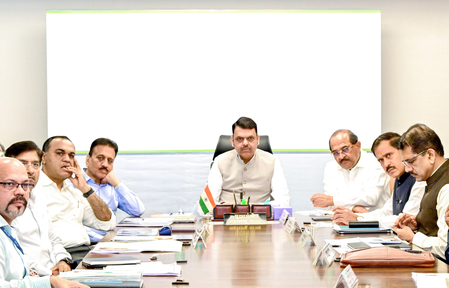
Mumbai, April 13 (IANS) The Maharashtra cabinet, chaired by Chief Minister Devendra Fadnavis, on Monday approved a project aimed at strengthening medical education, nursing, and healthcare services across the state with financial assistance worth Rs 3,708 crore from the Japan International Cooperation Agency (JICA).
The project, titled “Strengthening Tertiary Health Care Delivery, Medical Education System and Nursing System in Maharashtra,” will focus on developing infrastructure and providing state-of-the-art equipment for medical colleges, nursing colleges, and affiliated hospitals.
According to the release, funding will be made for newly established Government Medical Colleges in Wardha, Palghar, Ratnagiri, and Ahilyanagar; upgradation of nursing colleges at GT Hospital and St George’s (Mumbai), Dhule, Solapur, Ambajogai, Akola, IGMC Nagpur, Ratnagiri, Palghar, and Dharashiv; and construction of nursing colleges in Baramati, Sangli (Miraj), and Kolhapur.
Further, the government will provide funds for advanced medical equipment to Government Medical Colleges in Ahilyanagar, Bhandara, Gadchiroli, Hingoli, Jalna, Mumbai, Nashik, Parbhani, Satara, Palghar, Ratnagiri, and Wardha.
In addition, the provision is proposed for human resource development and enhancing capacity in hospital management and administration under the Indo-Japan Academic Exchange Programme.
An official said the initiative aims to provide affordable medical care to the state’s citizens.
Meanwhile, the cabinet also approved a comprehensive reform plan aligned with the “Viksit Maharashtra 2047” vision to simplify the recruitment process and provide greater opportunities for candidates.
The number of cadres under the Maharashtra Public Service Commission will increase to 102. The combined examination scheme will now include 18 new services and 93 additional cadres.
In a major relief for fresh graduates, the mandatory “experience” criteria for direct recruitment will generally be scrapped.
A “No Interview Policy” has been approved for non-gazetted Group-B and Group-C posts to ensure a faster, more transparent selection process. Modelled after the Union Public Service Commission’s “Pratibha Setu,” this portal will share the data of candidates who reached the interview stage but were not included in the final merit list with private and public sector employers to boost their job prospects.
The cabinet identified obsolete roles as “Dying Cadres” and will focus on creating new positions requiring Artificial Intelligence expertise. The recruitment process will now use DigiLocker for instant, paperless verification of educational and caste certificates.
–IANS
sj/dan


