
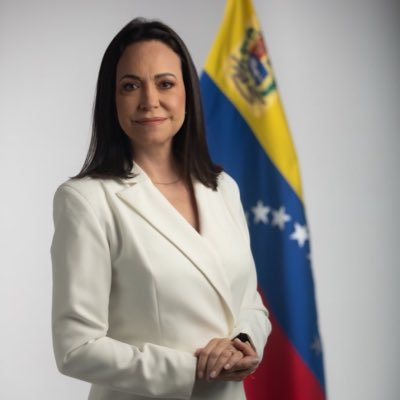
Washington, Feb 2 (IANS) Venezuelan opposition leader Maria Corina Machado said the transition away from the Maduro regime is “unstoppable,” arguing that sustained US pressure is forcing changes inside Venezuela even as the opposition continues to push for a democratic transfer of power.
Speaking on CBS News’ Face the Nation with Margaret Brennan, Machado said she does not believe Washington is easing pressure on Caracas, despite US Secretary of State Marco Rubio saying the United States does not intend to pursue military action or maintain a military presence inside Venezuela beyond a possible reopened embassy.
“I do not think that the pressure is being taken away,” Machado said. “Actually, everything Delcy Rodriguez is currently doing is because she’s complying with instructions she’s getting from the United States, and important steps are being taken.”
Machado said Venezuelans were “very, very grateful to the American people,” crediting President Donald Trump, Rubio and US lawmakers for what she described as strong backing at a critical moment. She said the message from Washington had been clearly delivered and was already producing visible effects.
“We’re seeing the results in the actions taken by the regime, and also in the mood and energy that is growing within the Venezuelan population,” she said.
Asked whether she or her movement was in contact with Delcy Rodriguez, whom she described as heading the current regime, Machado said there had been no direct talks. She said the opposition had offered to negotiate a transition after winning what she described as a landslide election victory, but the offer was rejected.
“On the contrary, they decided to unleash the most cruel, brutal repression wave,” she said, citing thousands of political prisoners and saying authorities showed no willingness to halt repression until early January.
“So eventually they might understand, or even very soon, that it is in their best interest to accept that transition is unstoppable,” Machado said.
Machado said discussions with Rubio made clear that Washington and the Venezuelan opposition shared the same end goal: a democratic transition followed by elections. She described the existing power structure as a “criminal structure” tied to “Russia, Iran, China, Cuba, extremist terrorist organizations such as Hezbollah, Hamas, the cartels, the guerrilla.”
“So it’s a process of dismantling this structure in a way that it’s most orderly under control possible in the short term,” she said, adding that the final step must be “a electoral process” producing legitimate institutions, including a president.
She warned that Venezuelans’ patience was wearing thin. Machado said there were more than 1,000 political prisoners at the start of January and that more than 700 remain in detention.
“Not one military prisoner, political prisoner has been liberated,” she said, pointing to detainees held for decades and to families holding round-the-clock vigils. “This was unthinkable before January 3rd,” she said, adding that public confidence had grown but that momentum must be sustained.
On recent legislation allowing privatization of the oil sector, Machado rejected the authority of the current National Assembly. “Whatever comes from that National Assembly has no legality,” she said, arguing it is not recognized by the Venezuelan people or the US government.
She said, however, that the direction of the proposed changes aligned with what Venezuelans want in the future. “We don’t want socialism,” she said, stressing the need for private property, rule of law and long-term guarantees for investors.
Machado said rebuilding the economy would also require the return of skilled Venezuelans who fled the country. “Almost a third of our population” has left, she said, arguing professionals would not return while figures tied to the regime remain in power.
Commenting on US moves to ease some sanctions and lift air restrictions, Machado said the steps were signals aimed at reinforcing the inevitability of change. “No American citizen or Venezuelan citizen is going to go back to a country that’s still under the power of Maduro regime and the cartel,” she said.
Asked whether she would be safe returning to Venezuela, Machado said conditions had shifted rapidly. “Right now, I don’t think they would dare to kill me because of the United States presence and pressure and actions,” she said.
Machado said she intends to be president “when the time comes,” but emphasised that leadership must be decided through elections. “This is a spiritual fight, an existential fight for Venezuela,” she said, describing the desire of millions in the diaspora to return home.
–IANS
lkj/rs