
Dhaka, Feb 1 (IANS) In a startling revelation, a report has claimed that at least four Lashkar-e-Taiba (LeT) terrorists were onboard Biman Bangladesh Airlines flight BG-342, which arrived in Dhaka from Karachi earlier this week, just days after the highly controversial resumption of direct bilateral air services between the two countries.
The allegation was made by investigative journalist Sahidul Hasan Khokon, who described the development as exposing what he termed the Yunus regime’s dangerous facilitation of terrorist infiltration into Bangladesh and its alleged pro-Islamist and Pakistan-appeasing approach, local media reported.
In a post on X on Saturday, Khokon stated that Biman Bangladesh Airlines flight BG-342 departed from Karachi’s Jinnah International Airport and landed at Hazrat Shahjalal International Airport in Dhaka at 4.20 a.m. on January 30, carrying a total of 113 passengers.
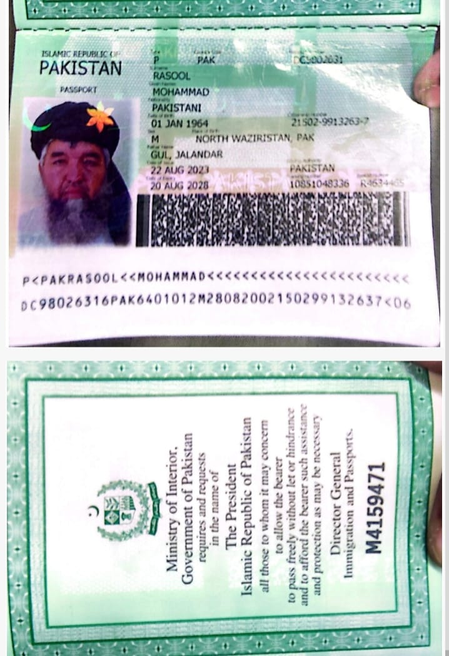
According to Khokon, among the passengers were individuals he identified as Lashkar-e-Taiba operatives, with their names and alleged affiliations reflected in their travel documents. He claimed this pointed to glaring security lapses, either due to negligence or deliberate inaction, under the current administration.
“Arrival of Lashkar-e-Taiba militants from Pakistan to Bangladesh,” Khokon wrote in his post, sharing images that appeared to show passport details of the alleged operatives.
The claim has emerged close on the heels of the Yunus government’s decision to resume direct flights between Dhaka and Karachi last week, restoring an air route after a gap of 14 years, according to a report by leading Bangladeshi media outlet The Daily Republic.
The move followed reportedly undisclosed understandings with Pakistani authorities and was marked by ceremonial gestures, including water cannon salutes.
According to the report, critics have alleged that the revival of the route came alongside several contentious concessions, including special visa waivers and privileges for Pakistani government officials, military personnel and intelligence operatives, relaxed inspection norms for Pakistani ships at Bangladeshi ports, and eased scrutiny of bilateral exchanges.
The current allegations have intensified concerns that civilian flights may now be exploited as cover for terrorist movement.
Lashkar-e-Taiba, a UN-designated terrorist organisation responsible for the 2008 Mumbai terror attacks and multiple other strikes, widely operates with support from Pakistan’s Inter-Services Intelligence.
Observers say allegations of its presence in Bangladesh fit into a broader narrative of rising extremist activity under the present regime, reports The Daily Republic.
The group has previously claimed that its members played a role in the July–August 2024 unrest that led to the ouster of the Awami League government.
Subsequently, reports emerged that fugitive jihadists and convicted criminals, including Syed Ziaul Haque and Abul Kalam Azad, alias Bachchu Razakar, entered Bangladesh using Pakistani passports.
In another development cited by analysts, Ibtisam Elahi Zaheer, a close aide of LeT founder Hafiz Saeed and General Secretary of Pakistan’s Markazi Jamiat Ahl-e-Hadith, undertook a multi-week visit to Bangladesh in October 2025, the report said.
During his stay, Zaheer reportedly toured Dhaka and several sensitive districts along the border with India, including Chapainawabganj, Nachole, Rangpur, Lalmonirhat, Nilphamari, Joypurhat and Rajshahi.
Zaheer is said to have delivered speeches calling for sacrifice “for the cause of Islam”, unity against “secular and liberal forces”, and the merger of Kashmir with Pakistan, while engaging with local radical groups linked to Ahl-e-Hadith Bangladesh and individuals such as Asadullah Al Ghalib, according to the report.
His visit was his second since Yunus assumed power, following an earlier trip in February 2025.
The report further mentioned that the security experts have warned that such “religious outreach” activities may serve as a front for rebuilding LeT’s cross-border networks, recruitment in vulnerable border regions and possible planning of operations targeting India’s eastern frontier and the northeastern states.
Critics have further alleged that the Yunus administration’s growing proximity to Pakistan’s intelligence establishment, coupled with the weakening of domestic security mechanisms, exemptions for Pakistani cargo inspections and dilution of visa screening processes, has effectively turned Bangladesh into a permissive transit zone for jihadist groups, The Daily Republic report said.
They claim that outfits such as LeT, the Tehreek-e-Taliban Pakistan, the Taliban, Ansar al-Islam and rogue military elements may be operating with varying degrees of state tolerance, it added.
With the February 12 elections approaching, opposition voices have described the alleged terrorist entry as a betrayal of promises of reform, warning that radicalisation and terror networks are being allowed to take root.
Activists and analysts have questioned how the alleged LeT operatives were cleared for entry and why what they describe as preferential treatment is being extended to Pakistan-linked entities, according to the report.
They have demanded immediate investigations, tighter border controls and a reassessment of Dhaka’s Pakistan policy, warning that continued silence from the authorities would only deepen fears that national security is being compromised for political survival and ideological alliances.
–IANS
sd/