
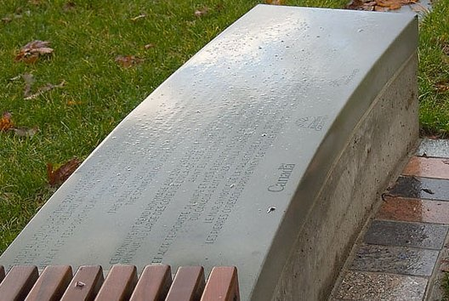
New Delhi, July 16: The bombing of Air India Flight 182, popularly known as the Kanishka bombing, remains the deadliest act of aviation terrorism before 9/11. On 23 June 1985, 329 innocent people, including 24 Indian citizens, lost their lives when the aircraft exploded over the Atlantic Ocean. Most of the victims were Canadians of Indian origin. It was not merely an attack on an aircraft – it was an attack on humanity.
For decades, this tragedy remained overshadowed by political debates, investigative failures and delayed justice. Canada’s own Commission of Inquiry, in its landmark report “Air India Flight 182: A Canadian Tragedy (2010)”, acknowledged serious institutional failures by Canadian security and intelligence agencies. It concluded that vital warnings were missed, intelligence was poorly handled, and the threat posed by pro-Khalistani extremists was grossly underestimated.
Only one individual, Inderjit Singh Reyat, was convicted in connection with the bombing. The principal conspirators were never convicted, largely because of lack of evidence that could sustain criminal prosecution. Consequently, many families continue to believe that justice remains incomplete.
Yet, one truth is beyond dispute: the Kanishka bombing was carried out in the name of Khalistani extremism by the Khalistani terrorists. Recognising this historical reality is not about reopening old wounds. It is about preventing the distortion of history and protecting future generations from extremist propaganda.
For years, supporters of the Khalistan movement have attempted to project it as an entirely peaceful political campaign that never targeted innocent civilians. The Kanishka bombing permanently shattered that claim. Hundreds of innocent passengers including women, children and entire families became victims of one of the worst terrorist attacks in aviation history. A clear and unequivocal acknowledgment that Khalistani extremists were responsible for this atrocity weakens attempts to romanticise violent separatism. It separates legitimate democratic expression from terrorism carried out in its name.
Why It Matters for Punjab
Punjab has paid an enormous price for militancy. Thousands of civilians, police personnel, public servants, journalists and religious leaders lost their lives during the years of terrorism. Economic development slowed, industries suffered, investment declined and an atmosphere of fear gripped the state.
Today’s Punjab faces new challenges—drug addiction, unemployment, migration of youth and organised crime. The last thing Punjab needs is the revival of narratives that glorify violence or portray convicted terrorists as heroes. An honest acceptance of the Kanishka tragedy can have several positive consequences for Punjab. First, it would undermine the moral legitimacy of extremist propaganda. Movements that claim to represent justice lose credibility when their association with mass violence is acknowledged. Also, it will end the so called conspiracy-theories where every act of innocent killing is attributed to ‘the agencies’. Second, it would discourage the glorification of terrorists through posters, slogans and public events. Societies cannot build a peaceful future while celebrating those associated with terror. Third, it would strengthen the resolve of ordinary Punjabis who overwhelmingly rejected violence in the past and continue to reject it today. Fourth, it would help young people distinguish between Punjab’s proud cultural identity and extremist ideologies that exploited religion for political violence. The Kanishka bombing also demonstrated that extremist movements can receive support from networks operating outside India’s borders. Diaspora funding, propaganda campaigns and permissive environments abroad can enable radical groups to survive long after their support within Punjab has diminished.
When governments openly recognise the violent history of Khalistani extremism and act consistently against those who glorify terrorism, it becomes harder for such organisations to recruit followers, raise funds or portray themselves as victims.
International cooperation against terrorism depends upon acknowledging historical facts rather than ignoring them for political convenience.
Justice is not measured only by convictions in a courtroom. It is also reflected in society’s willingness to remember the victims truthfully.
The Canadian government formally apologised for institutional failures that contributed to the tragedy. That apology recognised the suffering of victims’ families and the shortcomings of the investigation. Such acknowledgments are important because they reinforce the principle that governments must learn from their mistakes. Equally important is the continued rejection of any attempt to glorify acts of terrorism or those associated with them.
Punjab’s identity has never been one of hatred or separatism. It is the land of Guru Nanak Dev, Guru Gobind Singh, Maharaja Ranjit Singh, Bhagat Singh and countless patriots who stood for courage, sacrifice and service to humanity. The overwhelming majority of Punjabis seek peace, prosperity, education and opportunities for their children. They aspire to build businesses, excel in agriculture, contribute globally and preserve their rich cultural heritage—not return to the violence of the past.
Accepting the historical reality of the Kanishka bombing is therefore not an attack on Punjab or the Sikh community. On the contrary, it protects both from being unfairly associated with the actions of violent extremists. History should neither be forgotten nor rewritten. It should be honestly remembered so that future generations understand the terrible human cost of terrorism. The strongest answer to extremist ideology is not silence but truth. When the truth of Kanishka is fully acknowledged, the propaganda surrounding Khalistani violence loses much of its force, and Punjab can move forward with greater confidence, unity and peace.
(The writer is an independent commentator)