
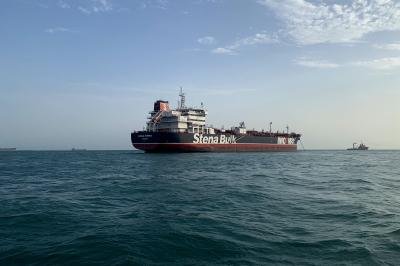
Tehran, April 4 (IANS) Iran has authorised the passage of ships carrying essential and humanitarian goods through the Strait of Hormuz to it ports, the country’s semi-official Tasnim news agency reported Saturday.
The report cited a letter, dated March 1, sent to Iran’s Ports and Maritime Organisation (PMO) by Hooman Fathi, Iran’s Deputy Agriculture Minister, as saying that the Iranian government and armed forces have authorised passage by those vessels.
The letter asked the PMO to allow the passage of ships destined for Iranian ports or currently in the Gulf of Oman that carry humanitarian commodities, especially essential goods and livestock inputs, based on the issued protocols.
It added that a list of such ships will be sent for further coordination, Xinhua news agency reported. Hormuz, which once saw around 130 vessels passing daily, now has approximately 20,000 seafarers stranded aboard 2,000 ships in its waters, according to the International Maritime Organisation.
On February 28, Israel and the United States launched joint attacks on Tehran and several other Iranian cities, killing Iran’s then Supreme Leader Ali Khamenei, along with senior officials and civilians.
Iran responded by launching waves of missile and drone strikes targeting Israel and US bases in the Middle East, and exercising tight control over the Strait of Hormuz.
Lloyd’s List Intelligence, a maritime data and intelligence company, revealed that only 292 ships transited the strait between February 28 and March 31, with 71 per cent of them being either owned by or affiliated with Iran.
Oil prices soared this week as investors considered how long the Middle East conflict would impede the transportation of crude oil through the strait, reported CNBC.
It added that June futures for international benchmark Brent crude rose more than six per cent to 107.35 US dollars per barrel.
Starting April 17, Amazon will impose a 3.5 per cent fuel and logistics surcharge on merchants’ fulfillment fees for sellers in the United States and Canada.
Nobel Laureate in Economic Sciences Paul Krugman this week argued that rising costs may hit American consumers the hardest through higher prices for food and everyday goods.
Germany’s federal government also said that petrol prices in the country had been fluctuating up to 22 times a day, as the war and disruptions to oil supplies raised costs.
Around 16 per cent of fuel stations in France are experiencing shortages, driven by panic buying and price rises linked to the war with Iran, The Connexion, France’s leading English-language media outlet, reported on Thursday.
–IANS
/as